How to Translate PDF
As PDFs are widely used across different countries and industries, you may often encounter documents in unfamiliar languages. With the AI-powered features in Tenorshare PDNob PDF Editor, you can translate entire PDFs or selected content into your preferred language in just a few clicks.
The translated content preserves the original layout, ensuring a smooth and efficient reading experience. This guide covers different ways to translate PDFs using PDNob across various scenarios.
1. Translate Specific Pages
You can quickly translate selected text within a PDF using the built-in AI tools, making it ideal for partial content translation.
- Open the PDF in Tenorshare PDNob PDF Editor.
-
Highlight the text you want to translate.
![highlight text]()
-
Click the floating toolbar and choose Translate.
![ai translate]()
-
A translation panel will appear. Select your target language to generate the result.
![ai translate box]()
- Copy the translated text or regenerate it if needed.


2. Use PDF Document Translation
Need to read a document in another language without losing track of the original wording? PDNob PDF Editor's AI-powered translation feature gives you two ways to do that: Side-by-Side Translation and Full-Document Translation. Whatever you're working through — a research paper, an eBook, a contract, or a financial report — you can translate it into the language you need and pick the mode that suits how you plan to read it.

AI translation credits uesage are unlimited, but AI PDF translation is limited to 600 pages per week to ensure fair usage and service stability.
2.1 How to Use Side-by-Side Translation
With Side-by-Side Translation, the original text and its translation sit next to each other so you can check them against one another as you go. Hover over a passage on either side, and the matching text on the other side lights up automatically, so nothing gets lost in the comparison. When you're done, export the result as a standalone translated PDF.
-
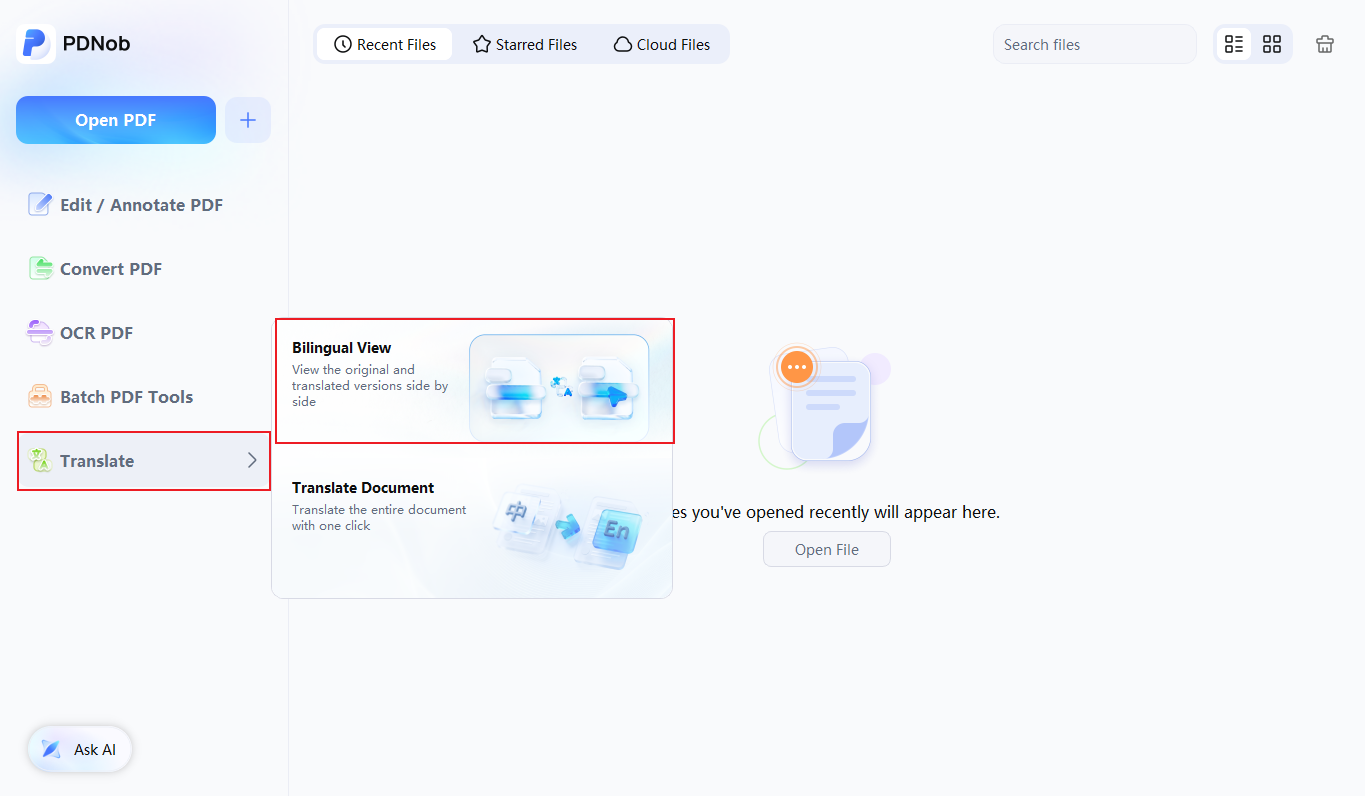
Start a Side-by-Side Translation: Open PDNob PDF Editor, then click "Translate" on the left side of the home page to start a new side-by-side translation tab — or, if you already have a PDF open, click "Bilingual view" in the right-hand toolbar. Then pick the file you want to translate.
-
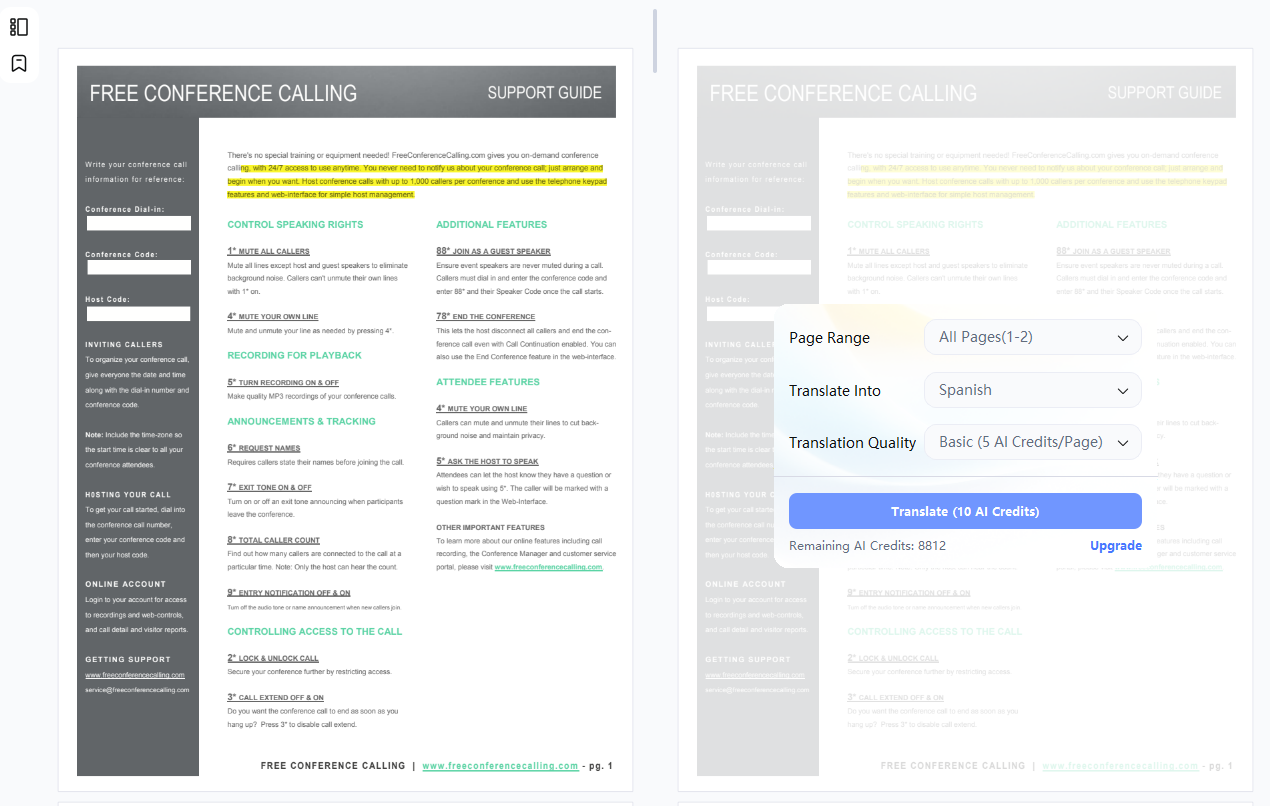
Configure and Launch Translation: On the translation screen, choose your page range, target language, and AI translation model, then click "Translate" to kick off the job. AI credits will be deducted according to the model you pick.
-
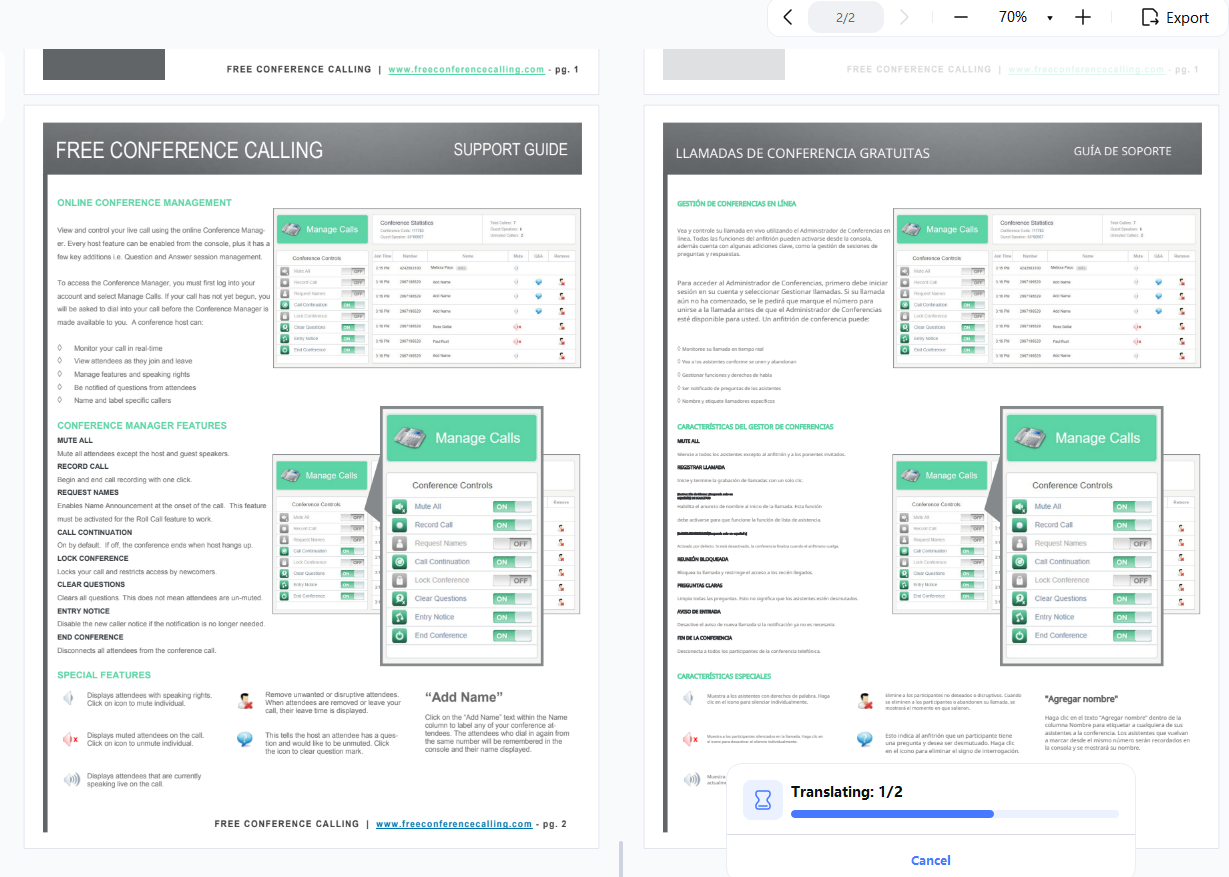
Watch Translations Appear Page by Page: Rather than making you wait for the entire file, PDNob translates one page at a time and shows each result the moment it's ready, so you can start reading right away. Note that editing, annotating, and other PDF tools are locked while the translation job is running.
-
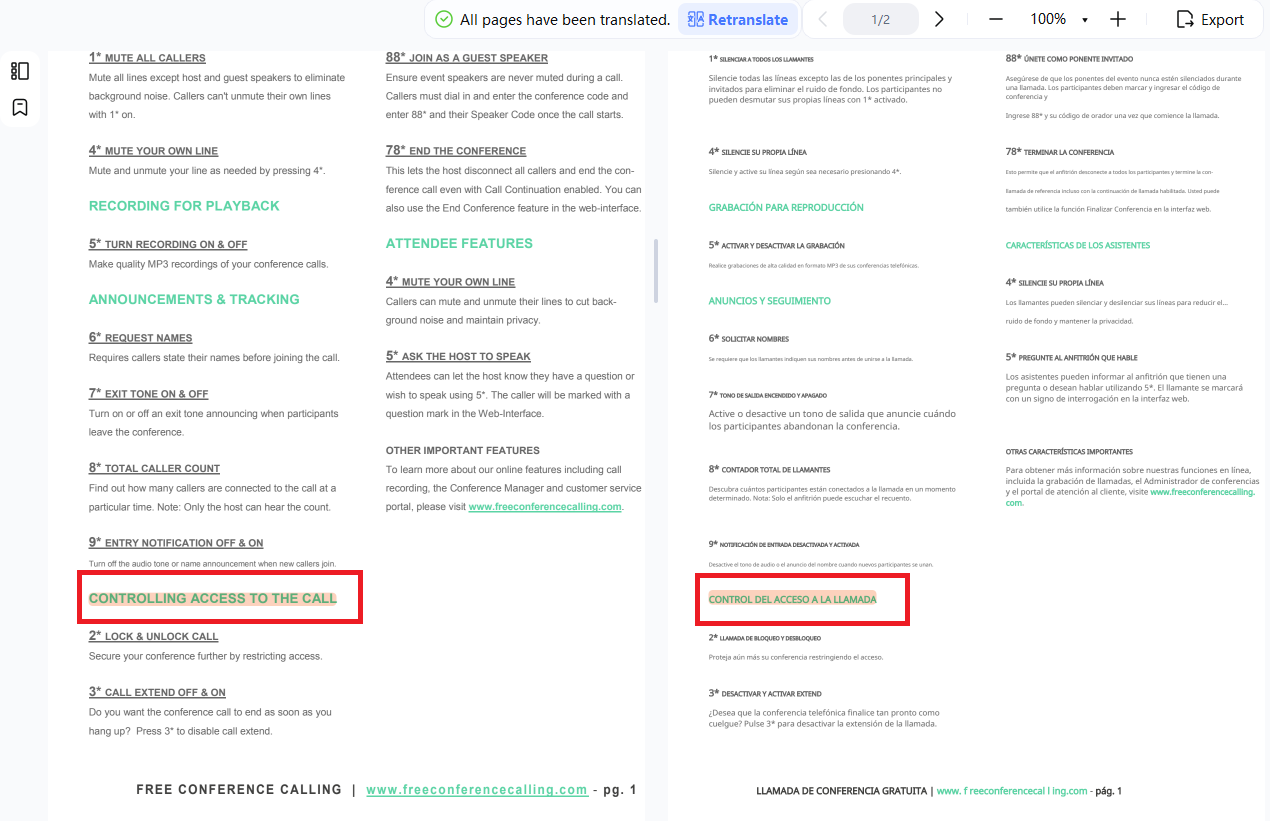
Compare the Two Versions: When the job finishes, the original and translated text sit side by side on screen. Hover over any block of text and the system highlights its counterpart on the opposite side, so you can spot the corresponding content instantly.
-
Export Your Translated PDF: Click "Export" to save the translation as a new PDF. You get to pick which pages to include — if some of the selected pages haven't been translated yet, PDNob will ask you to finish translating them first.
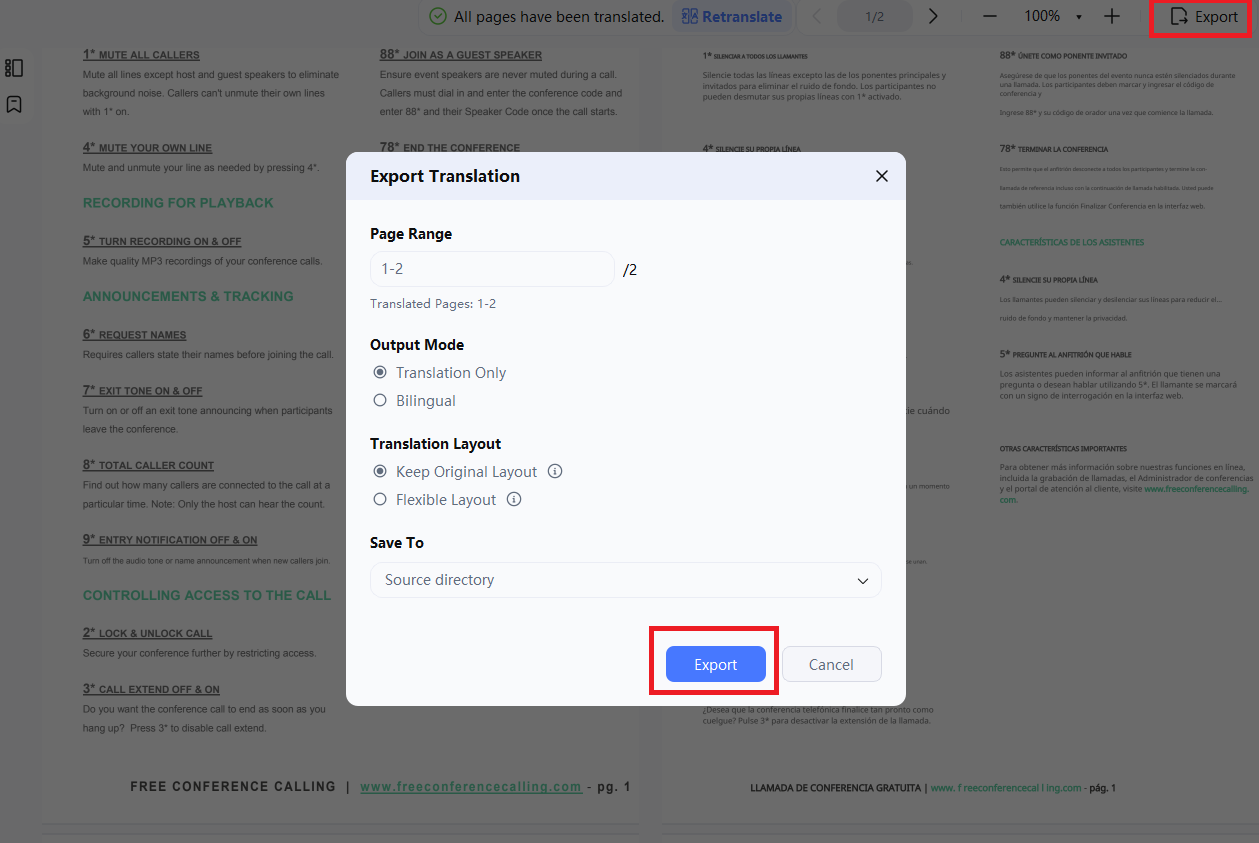


Closing the tab without exporting means the translation is gone for good — it won't show up later under "Recent Files." That's why PDNob asks you to confirm before closing, giving you the choice between "Export" or "Close Without Exporting."

2.2 How to Use Full-Document Translation
Full-Document Translation takes your whole PDF and turns it into a new file in the language you choose. Unlike a side-by-side result, this translated file stays fully functional — you can keep editing it, adding annotations, chatting with the AI about it, or running other PDF tools on it — making it the better option if you plan to keep working with the document afterward.
-
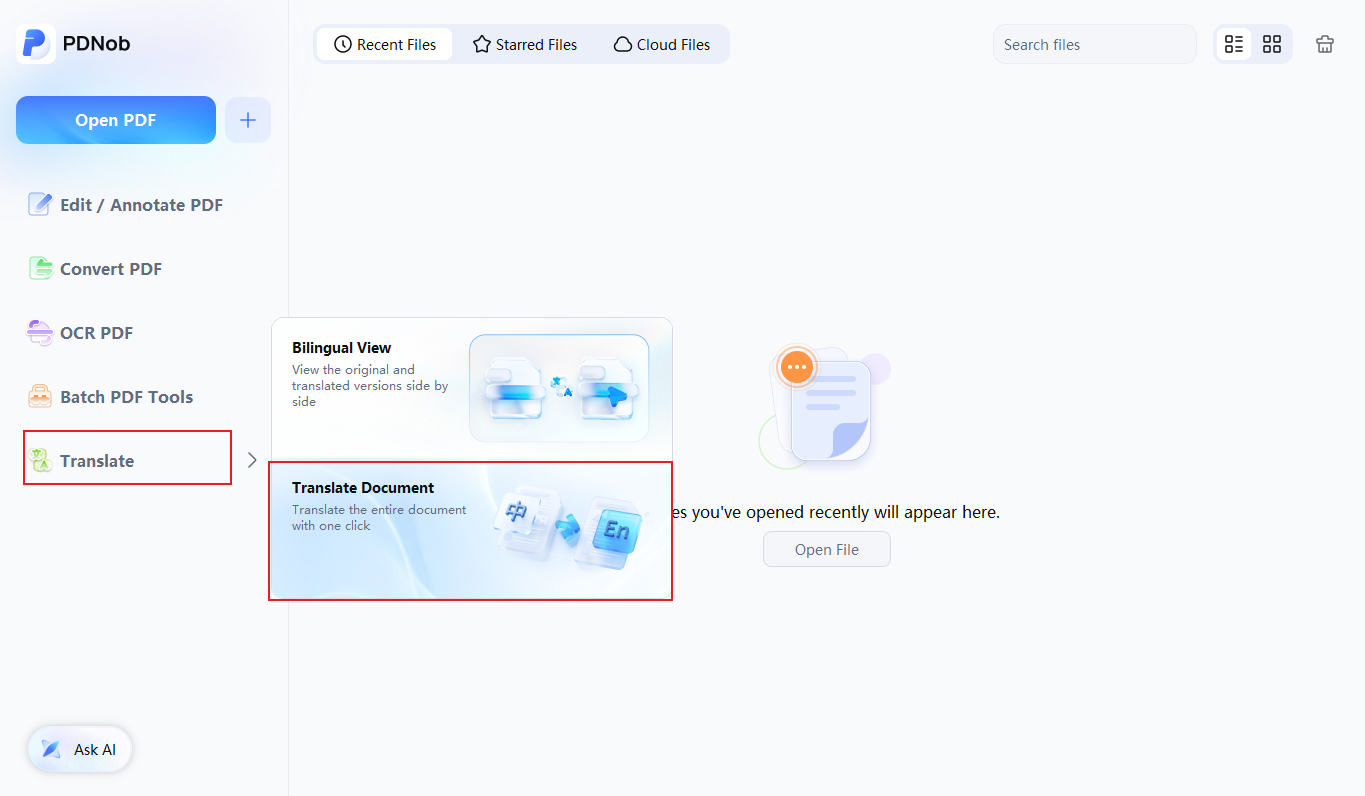
Start a Full-Document Translation: Open PDNob PDF Editor and click "Translate" on the left side of the home page, then open a PDF and click "Translate Document" in the right-hand toolbar.
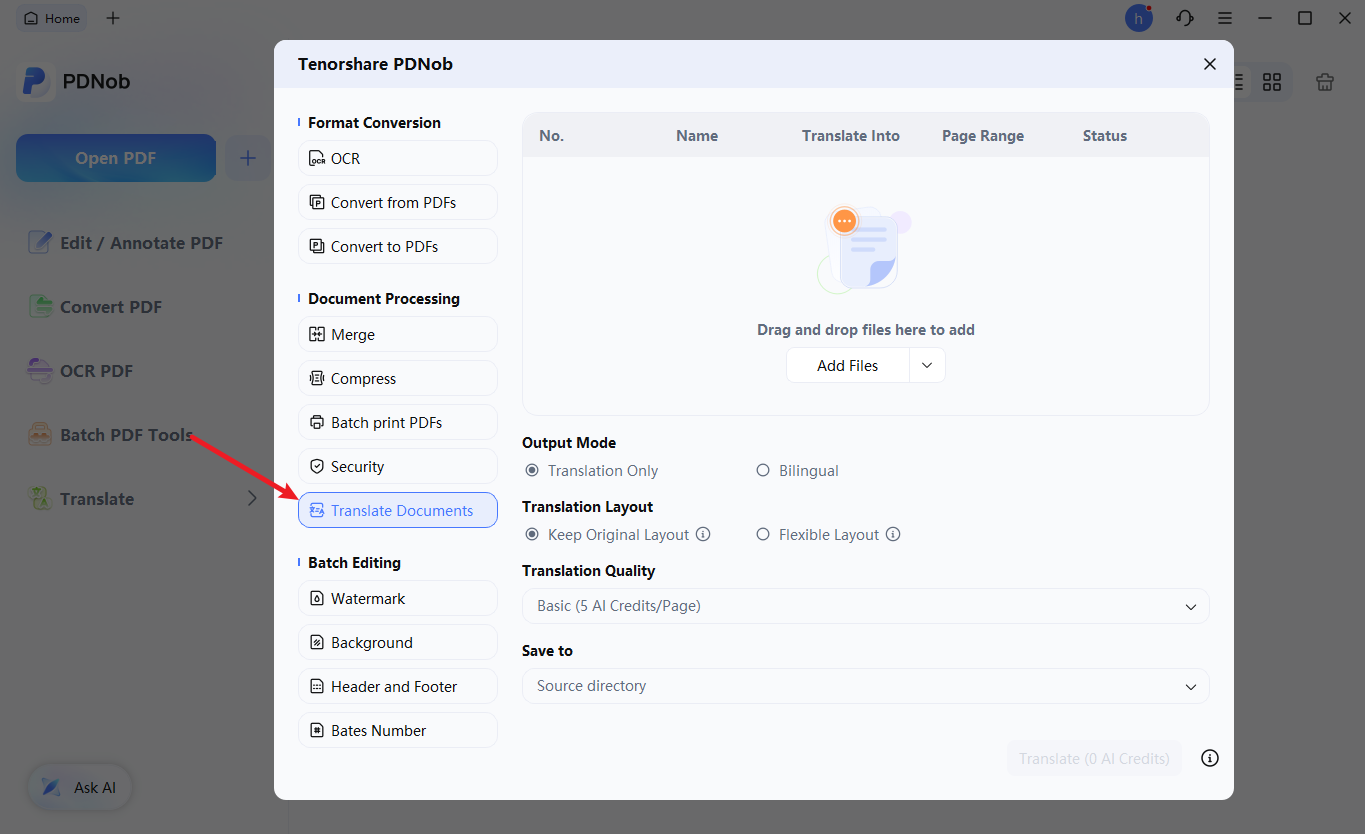
You can also get there through the Batch PDF Tools panel — select "Translate Documents," then choose the file you want translated.
-
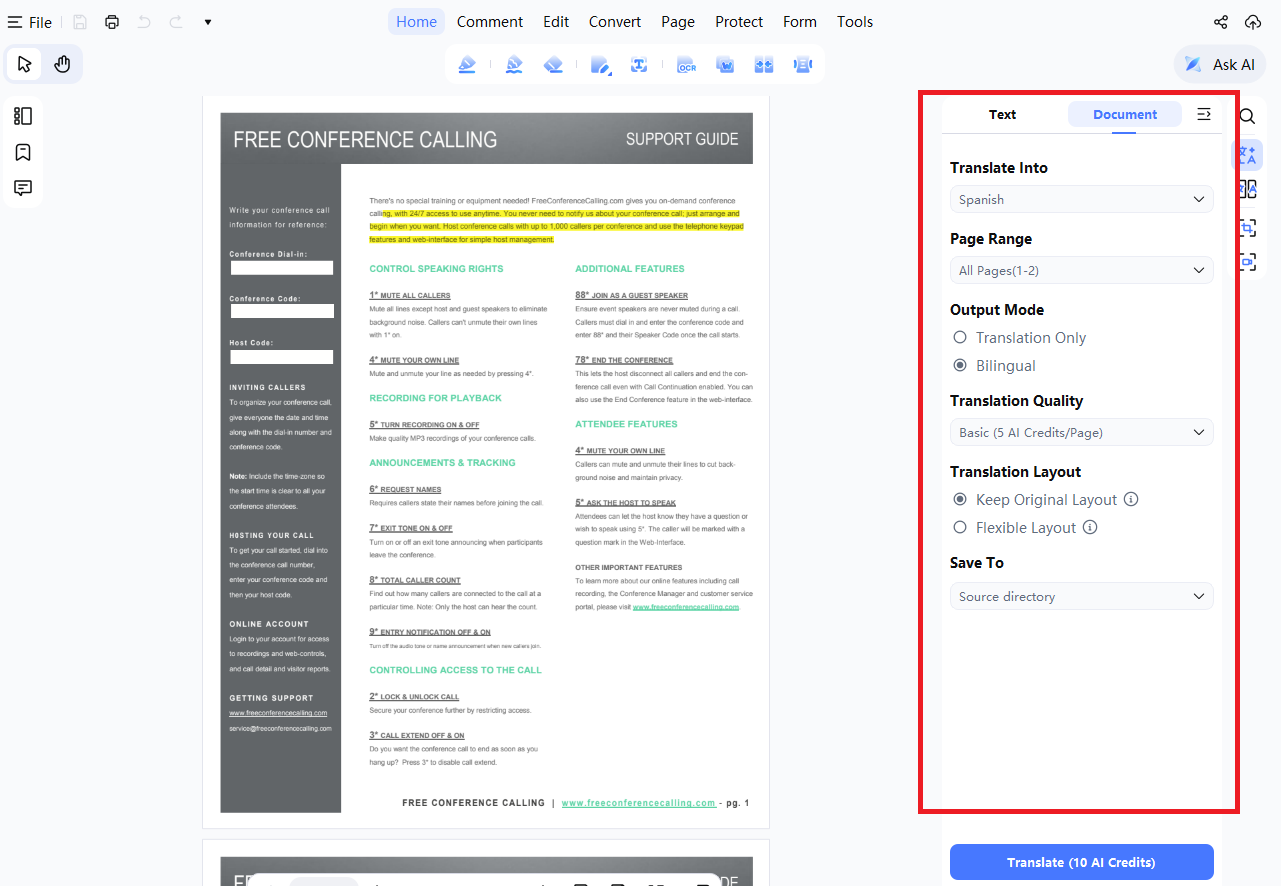
Configure Your Translation Settings: Set your page range, target language, output mode, AI translation model, and text layout, then click "Translate" to begin.
Output Modes
PDNob gives you two ways to output the translation:- Translation Only — Produces a PDF with just the translated text, good for reading or sharing the translation on its own.
- Bilingual — Produces a PDF showing the original and translated text together, better for studying, research, or proofreading work.
AI Translation Models
Pick from three tiers — Basic, Advanced, and Premium — depending on how much accuracy or nuance your translation needs.Translation Layout
Decide how the translated text should be arranged, based on your reading preference:- Keep Original Layout — Places the translation roughly where the source text was. If the translated text needs more room than the original space allows, PDNob may shrink the font automatically to make it fit.
- Flexible Layout — Adjusts font size and spacing block by block, prioritizing readability over matching the original positioning.
-
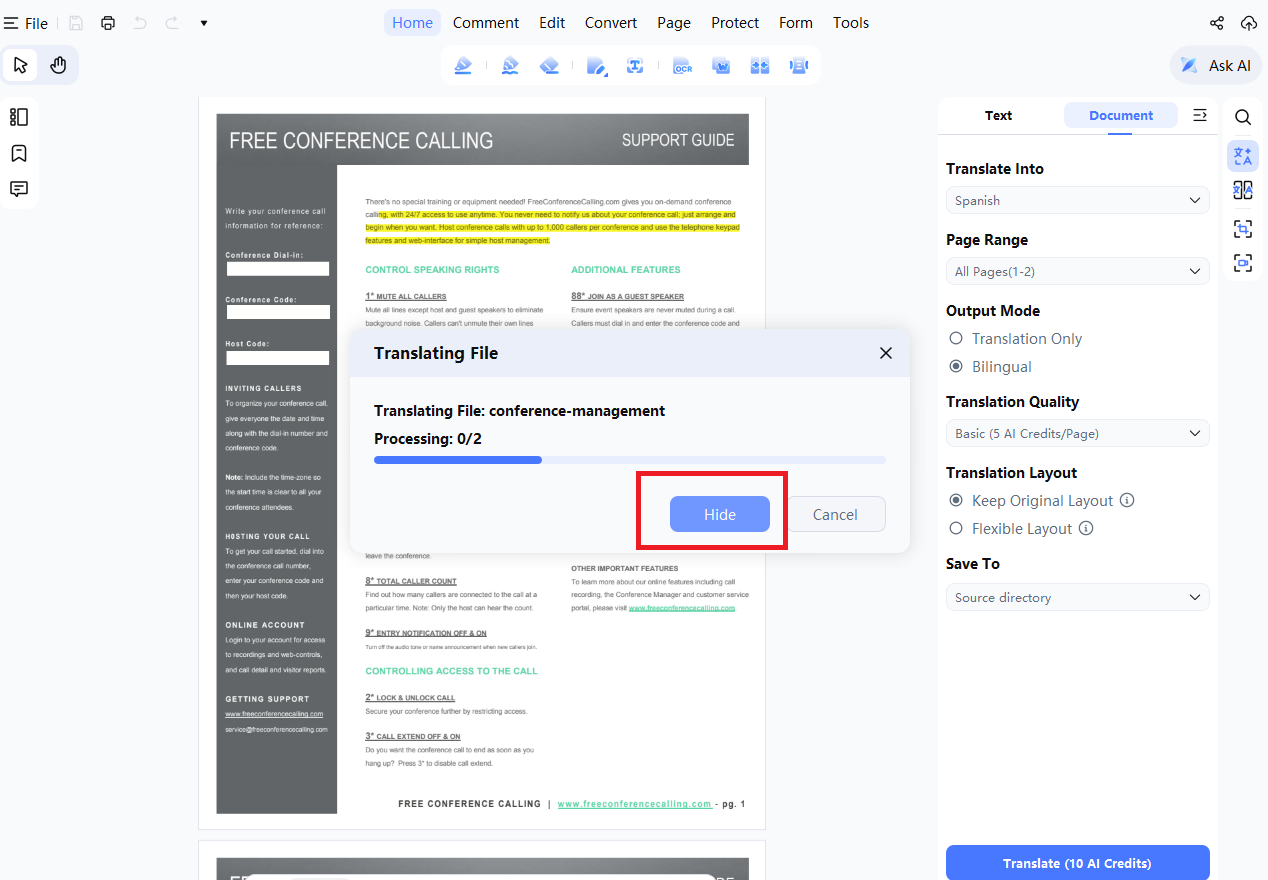
Let the Translation Run: You'll see live progress as the translation moves forward. If you'd rather keep working on something else, click "Hide" to send the job to the background and continue using other PDF tools while it finishes.
-
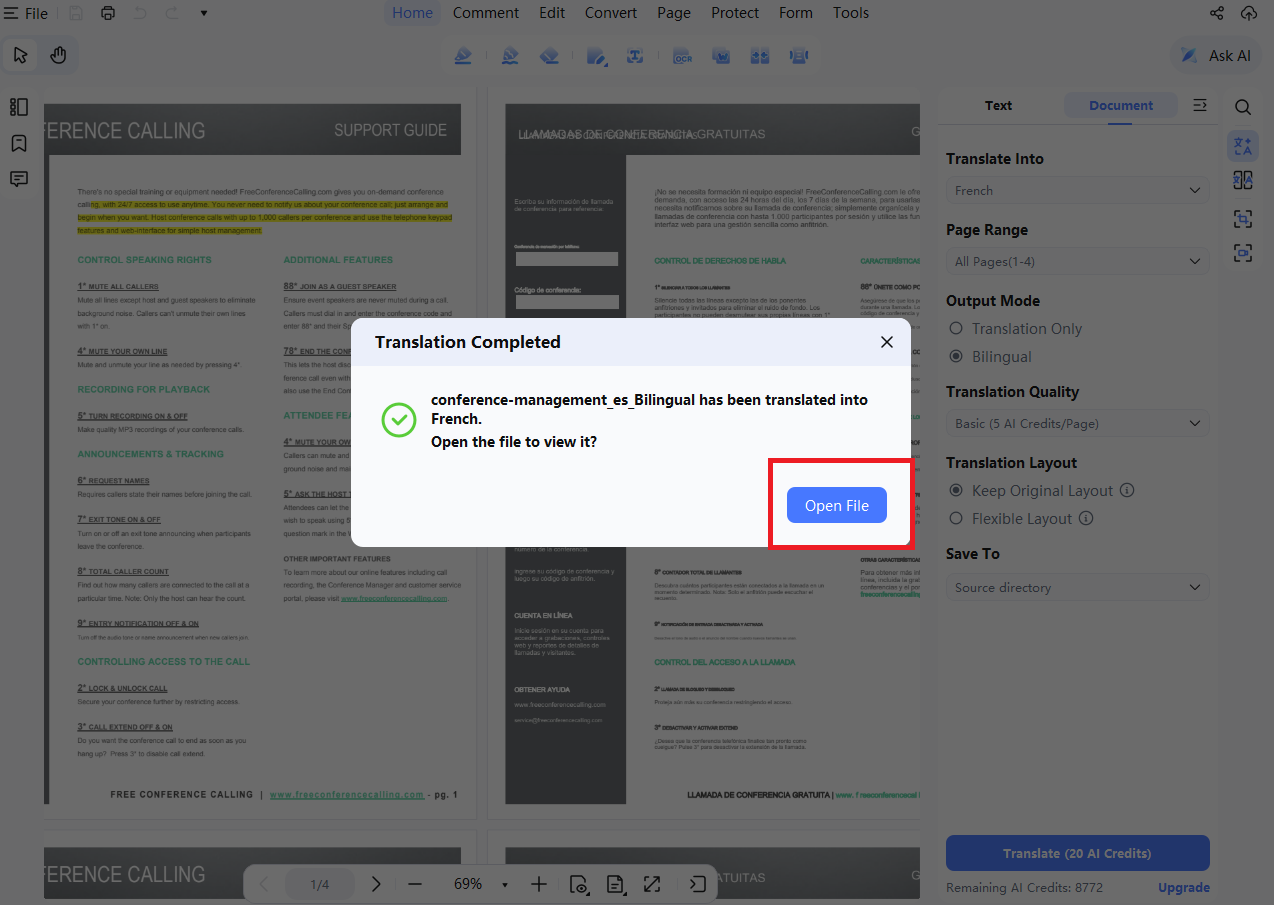
Open Your Translated File: Once the job is finished, PDNob creates the new translated PDF and lets you know it's ready. Click "Open File" to jump straight into it and keep reading, editing, or annotating right away.


3. Use AI Ask PDF Mode
You can also translate content using custom prompts. This method is ideal for translating specific sentences or paragraphs with more control.
- Open your PDF in Tenorshare PDNob PDF Editor.
- Copy the content you want to translate.
- Go to AI Assistant and open Ask PDF.
-
Paste the text and enter a prompt such as:
"Translate this to French." - The AI will generate the translated result. You can review, copy, or regenerate it.