

 iOS Tips & Latest Updates
 Bug Fixes, Unlock Guides
 Giveaways & Freebies
Cleamio: All-in-One Mac Cleaner & Optimizer
Clean junk files, free up space, and boost Mac performance
No.1 Mac Cleaner & Optimizer
Clean, speed up, and optimize your Mac
If your Mac suddenly feels slow or shows a Macintosh HD disk full warning, it usually means your storage is overloaded with unnecessary files. Learning how to clean up Macintosh HD can help restore performance, free up valuable storage space, and keep your system running smoothly.
In this guide, we’ll explain what fills your disk and show safe, effective ways to clear space on your Mac.

Many Mac users notice two different drives in Finder: Macintosh HD and Macintosh HD-Data. Understanding the difference between these two is important before trying to clean storage.
Macintosh HD is the main system volume that contains macOS and all core system files. This volume is protected by macOS and generally cannot be modified directly by users. It stores the operating system itself along with system applications and essential libraries.
Macintosh HD-Data is the volume where your personal files are stored. This includes:
If you are wondering what Macintosh HD data is, it simply refers to the storage area that holds user files and application data.
Most of the time, when people need to clear storage on Macintosh HD, they are actually cleaning files stored inside the Macintosh HD-Data volume.
Many users are surprised when their storage suddenly fills up. The reason is that macOS constantly creates temporary files, backups, and caches that accumulate over time.
Here are some of the most common things that take up space on Macintosh HD.
 Please swipe to view
When these files accumulate, the system may show warnings such as Macintosh HD disk full or reduced performance. Fortunately, there are several safe ways to clear this data and reclaim storage.
Below are practical methods to free up space on Macintosh HD and improve your Mac’s performance.
Deleting files does not immediately remove them from your system. Instead, they move to the Trash folder, where they still occupy storage.
Locate the “Trash/Bin” icon in the Dock.
Right-click the Trash icon and select “Empty Trash/Bin," then confirm deletion.
Emptying the Trash is one of the fastest ways to delete stuff off Macintosh HD and recover space.
macOS includes a built-in storage management tool that helps identify large files and unused data.
Click the Apple menu > “System Settings” (or “System Preferences” on older macOS).
Go to “General” > “Storage”.
Click “Optimize” or review the recommendations (Store in iCloud, Optimize Storage, Empty Trash Automatically, etc.).

Follow the on-screen suggestions for large files, unused apps, and old iOS backups.
From here you can:
This tool helps you quickly clear storage on Macintosh HD without installing additional software.
Manually searching for unnecessary files can be time-consuming. A smarter approach is using a system cleanup tool that scans the entire drive. One effective solution is Tenorshare Cleamio, which helps users quickly clear storage on Macintosh HD by detecting junk files, duplicates, large files, and system clutter.
Cleamio performs a deep scan of the system and highlights files that are safe to delete while protecting important system data.
Steps to Clean Junk Files with Cleamio:
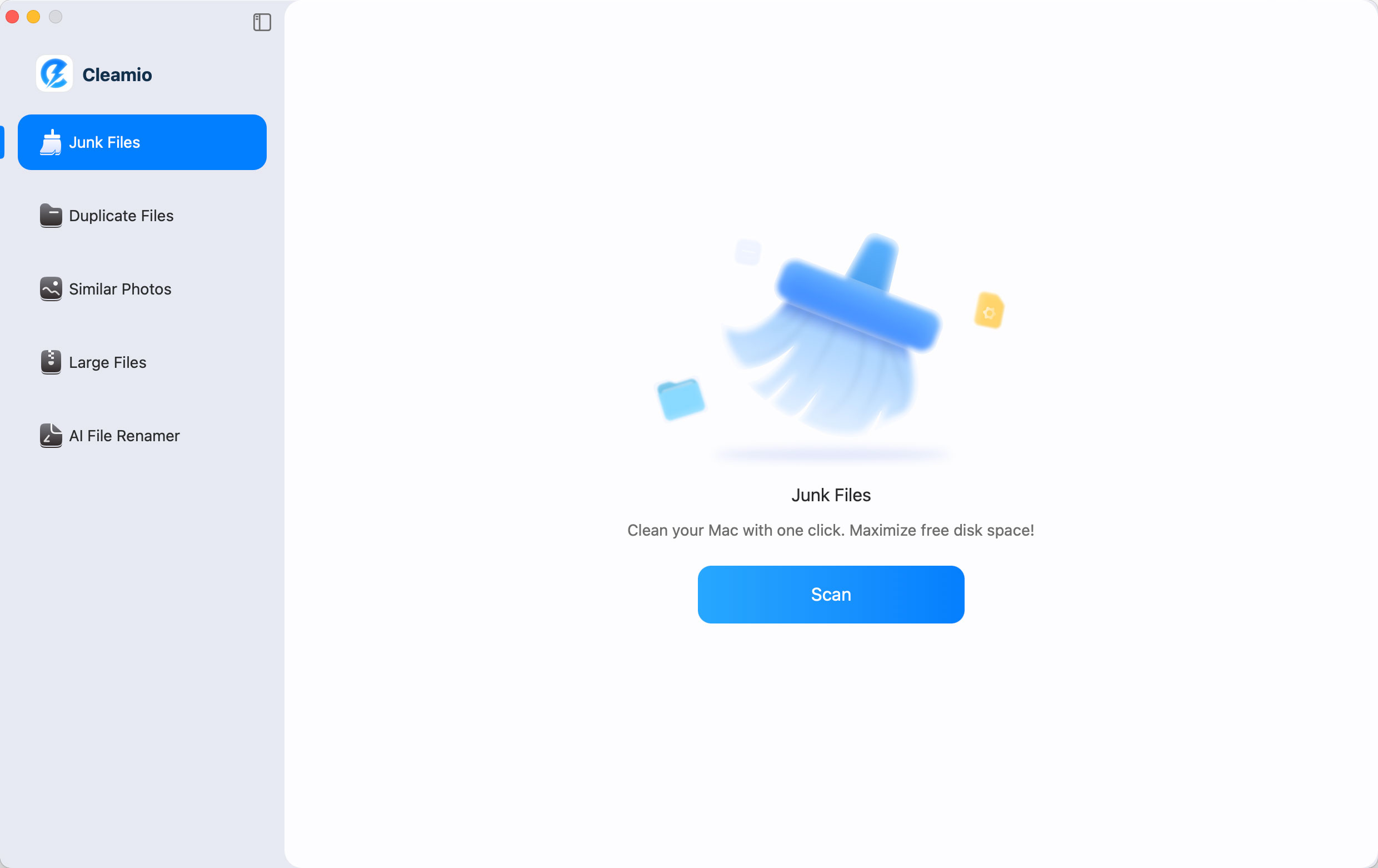
Download and install Tenorshare Cleamio. Launch the application and select "Junk Files", then click "Scan”.
Allow the software to scan your Mac, and once the scanning is complete, preview the file types and their files.
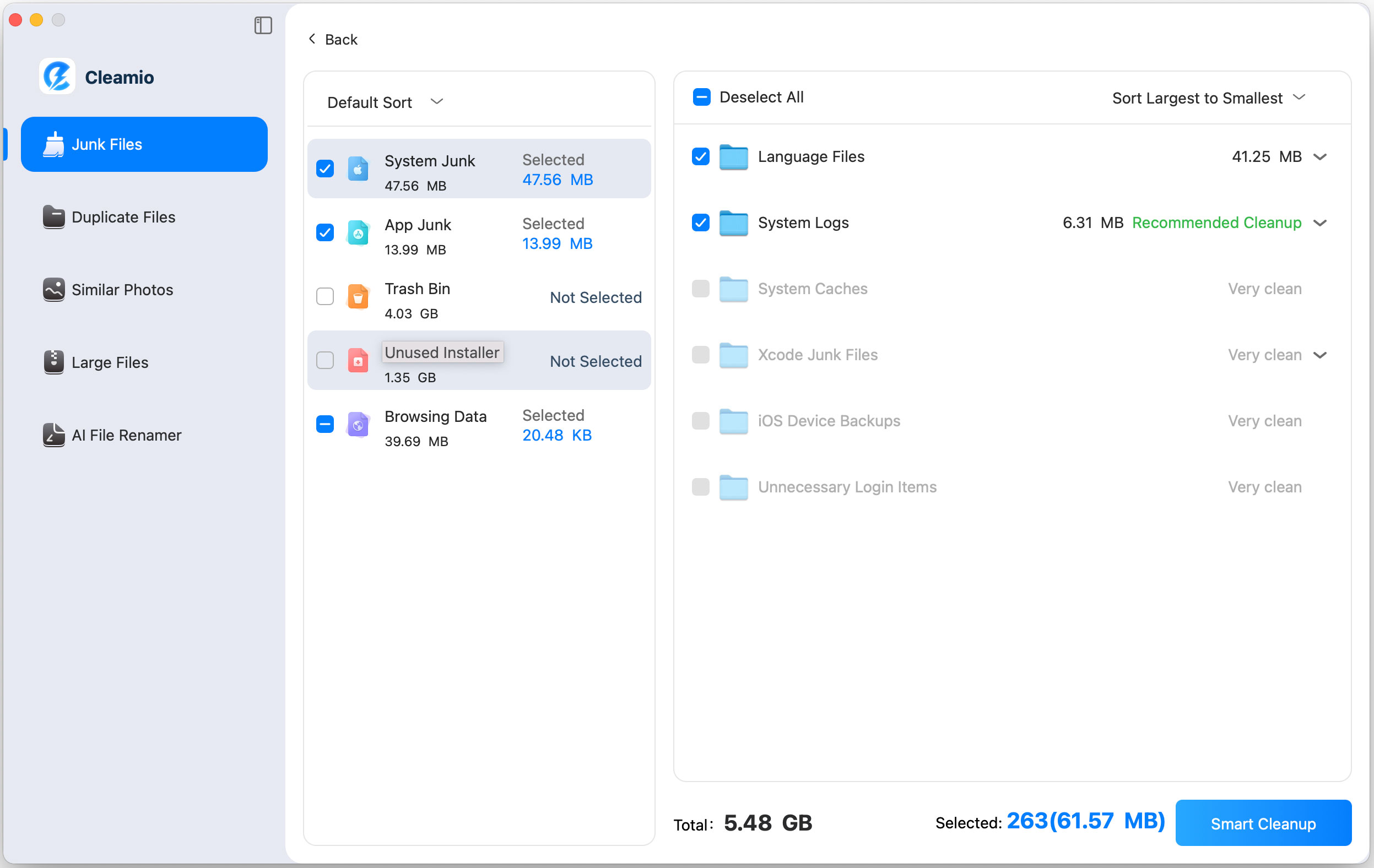
Click “Smart Cleanup” after selecting all the files and click “OK” once the cleanup is complete.
This method is especially useful if you want to get more space on Macintosh HD quickly.
Cache files help applications run faster, but they can grow very large over time.
Open Finder, then click “Go” and choose “Go to Folder”.
Type: “~/Library/Caches” and carefully delete unnecessary folders inside the cache directory.

Clearing caches can significantly free up space on Macintosh HD.
Unused apps often occupy large amounts of space. Even after uninstalling, leftover files may remain.
Open “Finder” and go to the Applications folder.
Drag unused apps to “Trash” and empty Trash afterward.

In case you wanna completely uninstall multiple apps from Mac, then you can give Cleamio a shot. It can remove all leftovers while uninstalling.
For a deeper cleanup, remove associated files located in the following locations with the help of “Go to Folder”:
Removing these files helps clear Macintosh HD data more thoroughly.
Log files and temporary system files can accumulate over time.
Open “Finder", then select “Go” and click “Go to Folder”.
Enter: “/Library/Logs”, “~/Library/Logs”, and “/private/var/log” then delete old log files that are no longer needed.

This process helps reduce unnecessary system and Mac hard drive clutter.
macOS automatically creates temporary backups called local snapshots when Time Machine is enabled. These snapshots can sometimes consume dozens of gigabytes.
Open “Terminal” and type: “tmutil listlocalsnapshots /”
Identify snapshots you want to delete and use this command: “sudo tmutil deletelocalsnapshots [snapshot date]”

Deleting these snapshots can help clear Macintosh HD data.
If you regularly back up your iPhone or iPad to your Mac, those backups may occupy large amounts of space.
Open "Settings" and go to "General," then open the "Storage" section.
Locate the “iOS Files” section and click the “i” button against it.

Now select and delete the outdated backups to free space.
Removing outdated backups is another effective way to clear space on Macintosh HD.
Cleaning your Mac once helps temporarily, but maintaining storage habits prevents future problems.
Here are several practical strategies.
1. Regularly Remove Large Files. Check your storage monthly and delete files that are no longer needed.
2. Clean Duplicate Files. Duplicate photos, documents, and videos can accumulate quickly.
3. Avoid Keeping Everything on the Desktop. A crowded desktop can slow down your system and make files harder to manage.
4. Use Cloud Storage for Old Files. Move older documents to services like iCloud Drive or external storage.
5. Clear Downloads Frequently. The Downloads folder often collects installers, images, and temporary files.
6. Maintain Regular System Cleanup. Running periodic cleanup scans helps remove junk files automatically.
7. Monitor Storage Usage. Check Mac Storage regularly to see what categories are consuming space.
Following these practices helps prevent another Macintosh HD disk full warning.
When your system storage becomes full, knowing how to clean up Macintosh HD can significantly improve performance and free up valuable space. By removing unnecessary files, clearing caches, deleting backups, and uninstalling unused apps, you can reclaim large amounts of storage.
Tools like Tenorshare Cleamio simplify this process by scanning your Mac and safely removing junk files, duplicates, and large files to keep your storage optimized.


then write your review
Leave a Comment
Create your review for Tenorshare articles
 Cleamio
All-in-One Mac Cleaner & Optimizer
Share this post


Cleamio: All-in-One Mac Cleaner & Optimizer
Clean junk files, free up space, and boost Mac performance
No.1 Mac Cleaner & Optimizer
Clean, speed up, and optimize your Mac
By Jenefey Aaron
2026-09-28 / Mac Cleanup