If you're using a MacBook Pro or MacBook Air and suddenly notice that your
storage is running out, System Data is often the culprit. Many users are
surprised to see System Data taking up tens or even hundreds of gigabytes with
no clear explanation. The good news is that system data being too large on Mac
is a common issue and, more importantly, fixable.
This guide explains what System Data is, why it grows so large, and how to
safely reduce it without risking macOS stability.
Part 1. What Is System Data on Mac? How Large Should System Data Be on Mac?
Before cleaning anything, it’s essential to understand what macOS means by
"System Data" and what is considered normal.
1. What Is Mac System Data?
System Data (formerly called “Other Storage”) is a macOS storage category
that includes files the system needs to operate but doesn’t classify under
Apps, Documents, Photos, or Media.
In simple terms, what does system data mean on a Mac? It’s a collection of
system-related files, caches, logs, backups, and temporary data that macOS
and apps generate during everyday use.
Over time, these files stack up, especially on MacBook Pro and Air models
with limited SSD space.
Part 3. Safest & Most Effective: How to Delete System Data on Mac in One
Click
Manually hunting system files can be risky. That’s why the safest approach
is using a dedicated Mac cleanup tool.
Tenorshare Cleamio
is designed specifically to clean system data on Mac safely, without
deleting protected macOS files. It deep scans the system and app junk and
clearly labels what can and cannot be deleted.
There is a Smart Cleanup experience for one-click optimization that also
reduces the risk of accidental system damage. Cleamio doesn’t blindly delete
files; it guides you through safe cleanup.
Download and install
Cleamio
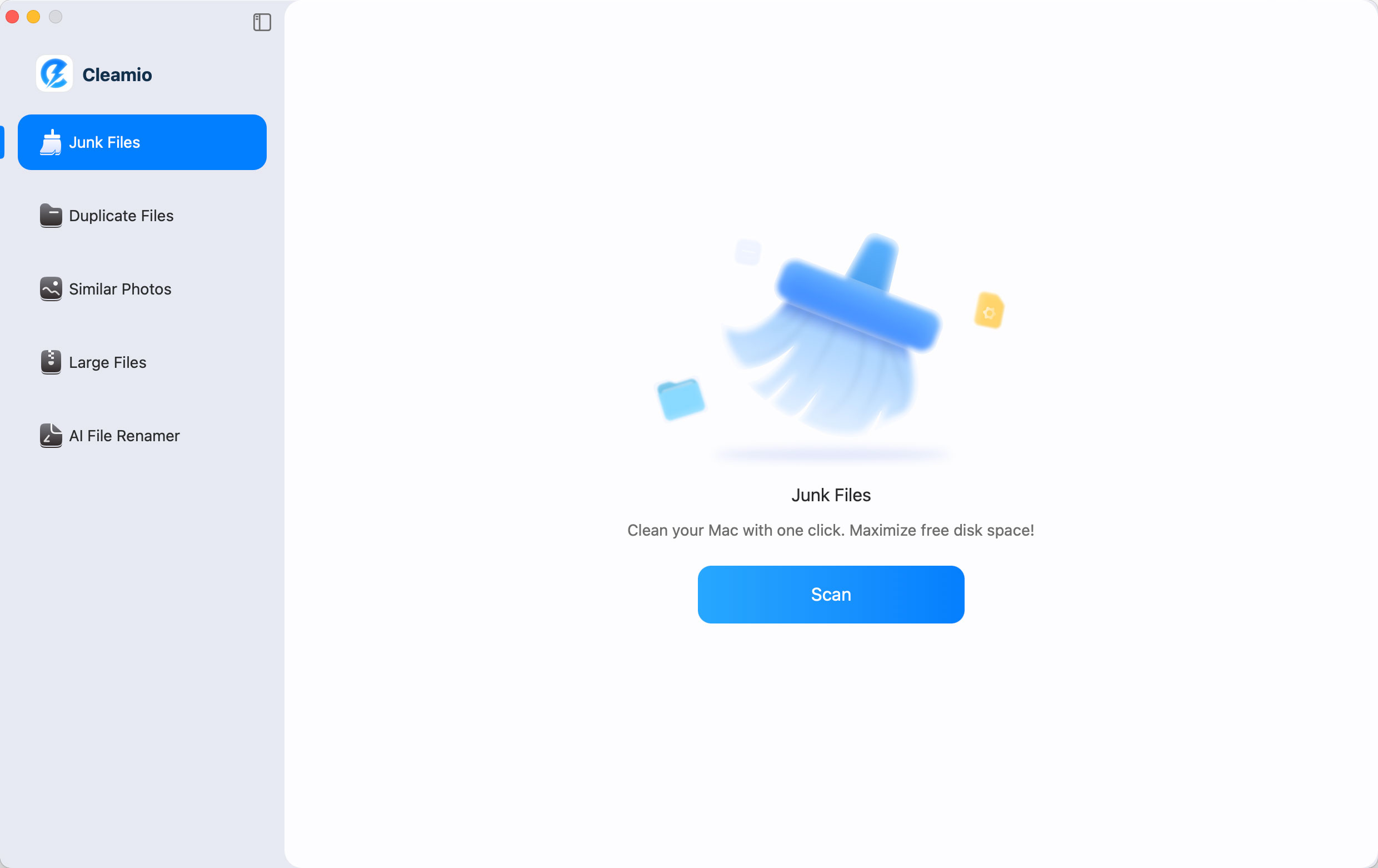
on your Mac and open it. From the home interface, select the "Junk
Files" and click "Scan."
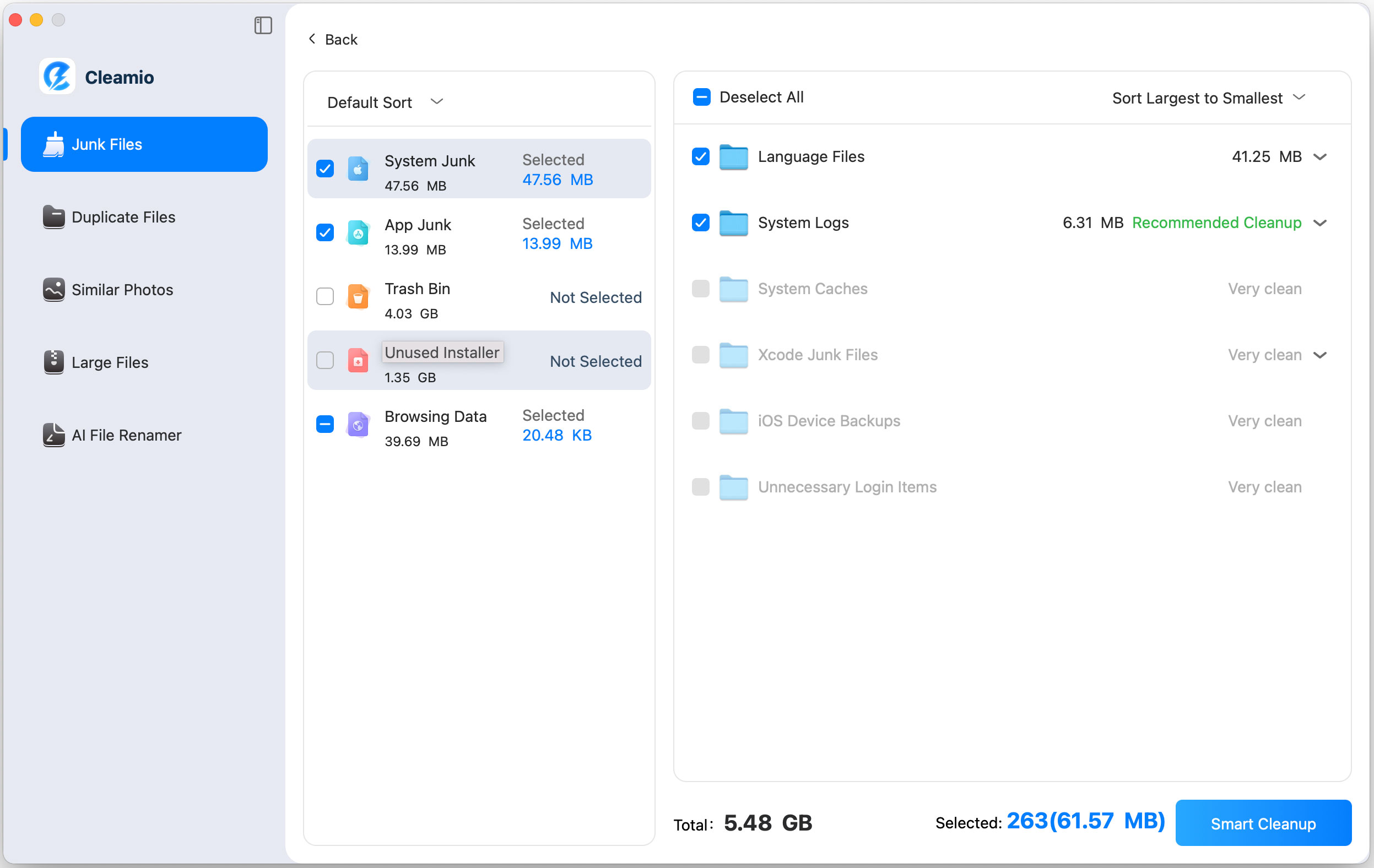
Now, Cleamio will show all the junk files on your computer, including
System Data. Choose the files you want to delete by clicking them and
clicking the “Smart Cleanup” button at the bottom.
Cleamio will automatically clean your system, and you can finish the
process by clicking “OK”.
This method is ideal if you want to remove system data on a Mac without
technical complexity.
Part 4. How to Clear System Data on Mac Safely (Common Fixes for Macbook
Pro/Air)
If you prefer manual cleanup or want to target specific areas, try the
following safe methods for deleting system data on Mac.
1. Delete Time Machine Local Snapshots
macOS creates local snapshots when Time Machine is enabled, even without an
external drive. Deleting the old, unusable local snapshots means getting
your space.
Open Terminal on your Mac and run the following commands:
“tmutil listlocalsnapshots /”
sudo tmutil deletelocalsnapshots [snapshot_date]
Restart Mac after successfully deleting
2. Delete iOS Backups
Old iPhone/iPad backups can silently consume system data and take up a lot
of space on your Mac. Keeping them is useless for an average user, and
deleting helps save space.
Open Finder and click "Go," then choose "Go to Folder” and enter “~/Library/Application Support/MobileSync/Backup."
Delete outdated backups.
3. Clear Cache Files Manually
Cache files grow continuously and aren’t always removed automatically.
Manually clearing cache files is a great way to remove system data on a Mac.
Open Finder and press “Command + Shift + G” then enter
“~/Library/Caches”
Mail attachments and logs can become massive over time. If system data is
taking up space on your Mac, you can disable these Mail features.
Open Mail App and go to “Settings", then "Accounts" to disable
unnecessary accounts.
Delete old attachments by going into Finder and pressing “CMD + Shift +
G” and entering “~/Library/Mail”
5. Delete Screen Recordings & Empty Trash
Screen recordings and large deleted files still count toward system data
until Trash is emptied. Deleting these useless files will get you a lot of
free space, and you will no longer see the "macOS system data is huge" and
related errors.
Check your default screen recordings folder and delete unnecessary
recordings that you do not need.
Right-click “Trash” from the dock and click “Empty Trash," and
authenticate by clicking "Empty Trash" in the pop-up window.
Part 5. How to Reduce System Data on Mac (Prevent It from Coming Back)
Once the macOS system data is cleaned, prevention matters to keep it from
coming back. Here are some expert tips to keep macOS system data cleanup
under control:
Restart your Mac weekly
Clear browser and app caches monthly
Delete old iOS backups regularly
Limit screen recordings
Uninstall unused apps properly
Use a tool like Cleamio for routine scans
These habits help you get rid of system data on Mac in the long term.
People Also Ask about System Data Too Large on Mac
Q1: Why do I have 200 GB of system data on my Mac?
This usually comes from accumulated Time Machine snapshots, iOS backups,
cache files, and app leftovers over months or years of use.
Q2: Does Mac have a system cleanup?
macOS provides limited storage suggestions, but it doesn’t deeply clean
system data. Dedicated tools like Tenorshare Cleamio are far more effective
and safer.
Conclusion
If system data is too large on Mac and it is eating up your MacBook
Pro or Air storage, you’re not dealing with a bug; you’re dealing with
accumulated system files. Understanding what System Data includes makes
cleanup much safer.
While manual methods work, the most reliable and beginner-friendly solution
is Tenorshare Cleamio, which removes unnecessary system data without
risking macOS stability. Regular cleanup keeps your Mac fast, organized, and
storage-efficient.






 iOS Tips & Latest Updates
 Bug Fixes, Unlock Guides
 Giveaways & Freebies





By Jenefey Aaron
2026-09-28 / Mac Cleanup