


Cleamio: All-in-One Mac Cleaner & Optimizer
Clean junk files, free up space, and boost Mac performance
No.1 Mac Cleaner & Optimizer
Clean, speed up, and optimize your Mac
Running out of storage on your Mac when you need it most can be incredibly annoying. Those missing gigabytes often aren't gone. They are hiding in Time Machine backups and local snapshots. Over time, these hidden files can consume significant space and slow down your system.
The good news? You can safely delete Time Machine backups on Mac including local snapshots to free up storage without harming your important data. This guide explains when, why, and how to properly remove Time Machine backups, free up storage, and keep your Mac running smoothly.

Time Machine is designed to manage backups automatically, but there are situations where manual cleanup becomes necessary. Understanding the right timing and reasons helps avoid accidental data loss.
Yes, it is safe to delete old Time Machine backups in most cases. Time Machine creates backups over time, keeping older versions of your files so you can restore them if needed. When you delete old backups, you are only removing those older versions, not your current files or system.
What happens after deleting old backups:
Your data remains protected as long as you keep at least one recent backup.
Deleting old Time Machine backups provides several benefits:
Regularly deleting old backups from Time Machine helps maintain a healthy backup system while keeping your Mac running smoothly.
Follow these best practices when deciding which backups to keep to stay protected while still reclaiming storage:
This balanced approach ensures you can safely clear Time Machine backups without compromising data security.

Local snapshots are temporary backups stored on your Mac when your Time Machine drive isn't connected. They can silently take up a lot of storage. The following methods help you safely remove them and free up space.
The easiest way to remove Time Machine local snapshots is by restarting the backup service. Turning the Time Machine off and back on forces macOS to automatically clear unnecessary local snapshots without using Terminal or advanced tools.
Steps:
Click the top-left Apple logo, then open "System Settings".
Open "General", then open "Time Machine".
Toggle off or uncheck "Back Up Automatically" the box (or set Backup Frequency to Manually in Ventura or later).

Wait 5 to 10 minutes so macOS can clear local snapshots in the background.
Turn "Back Up Automatically" back on.

This doesn't always remove all snapshots immediately, especially if disk pressure is low.
Disk Utility allows you to view storage usage and, in some macOS versions, manage APFS snapshots. While it doesn't always allow direct deletion, it helps identify snapshot-related space usage and confirm whether snapshots exist on your Mac.
Steps:
Open "Disk Utility" from Applications > Utilities.
Select your main volume such as "Macintosh HD" from the sidebar.
From the menu bar, choose "View" > "Show APFS Snapshots" to display all volumes and snapshots.

Select the snapshots you want to remove (hold Command for multiple).
Then click the Delete button (minus sign –) in the toolbar, or right-click and choose "Delete APFS Snapshot".
Confirm the deletion when prompted by clicking "Delete".
Restart your Mac to allow macOS to remove unnecessary local snapshots.
This method works best when disk space is constrained.
Using Terminal is the most reliable and effective way to delete Time Machine local snapshots. This method gives you full control to remove specific snapshots and instantly free up disk space when other options don't work.
Steps:
Open "Terminal" from Applications, then Utilities.
List all local snapshots by typing: tmutil listlocalsnapshots /
Note the snapshot date you want to remove.
Delete the snapshot using: sudo tmutil deletelocalsnapshots YYYY-MM-DD-HHMMSS (e.g., sudo tmutil deletelocalsnapshots 2026-01-30-123456).

Enter your administrator password and wait for confirmation.

Deleted snapshots cannot be recovered once removed.
If your Time Machine backup disk is full, you'll need to remove old backups manually. Below are three proven methods.
Using the Time Machine interface is the safest and most Apple-recommended way to erase a Time Machine backup. This method lets you delete specific backups directly from Time Machine while preserving the integrity of your external backup drive.
Steps: Steps:
Connect your Time Machine external hard drive to your Mac.
Select the "Time Machine" icon from the menu bar and choose "Enter Time Machine".

Go to the "backup data" you want to delete.
Click the gear icon (⋯) or "Action menu".
Choose "Delete Backup" and confirm.

Finder gives you direct access to your backup drive, allowing you to clear Time Machine backups manually. This method works well when Time Machine won't load properly but you still need to remove old backups from Time Machine to free storage.
Plug in your Time Machine backup drive.
Open "Finder" and select the external drive.
Select the backup drive from the sidebar.
Open the "Backups.backupdb" folder.

Open the folder named after your Mac.
Right-click the dated backup you want to remove.
Select "Move to Trash", then empty "Trash".
You may be asked to enter your administrator password to erase a Time Machine backup.
Terminal offers the most powerful way to delete old Time Machine backups, especially when Finder or Time Machine fails. This advanced method is ideal for users who need full control when safely deleting old backups from Time Machine.
Steps:
Connect your Time Machine backup disk.
Open Terminal from "Applications", then "Utilities".
List all backups by typing: tmutil listbackups.
Copy the full path of the backup you want to remove.
Run the command: sudo tmutil delete /path/to/backup (e.g., sudo tmutil delete /Volumes/YourDriveName/Backups.backupdb/YourMacName/2025-01-01-120000).

Enter your "Mac password" and wait for completion.
This action permanently removes the selected backup and cannot be undone.
Deleting Time Machine backups helps, but it's often not enough. Macs accumulate junk files, hidden caches, leftover app data, and massive system clutter over time. This is where Tenorshare Cleamio comes in.
Tenorshare Cleamio is an AI powered Mac cleaner designed for a deep, 360° cleanup. It uses the MD5 Message-Digest Algorithm to safely identify and remove junk files without touching your personal data. With just one click, Cleamio can reclaim 20GB+ of space, speed up your Mac, and reduce Finder lag, while fully protecting your privacy.
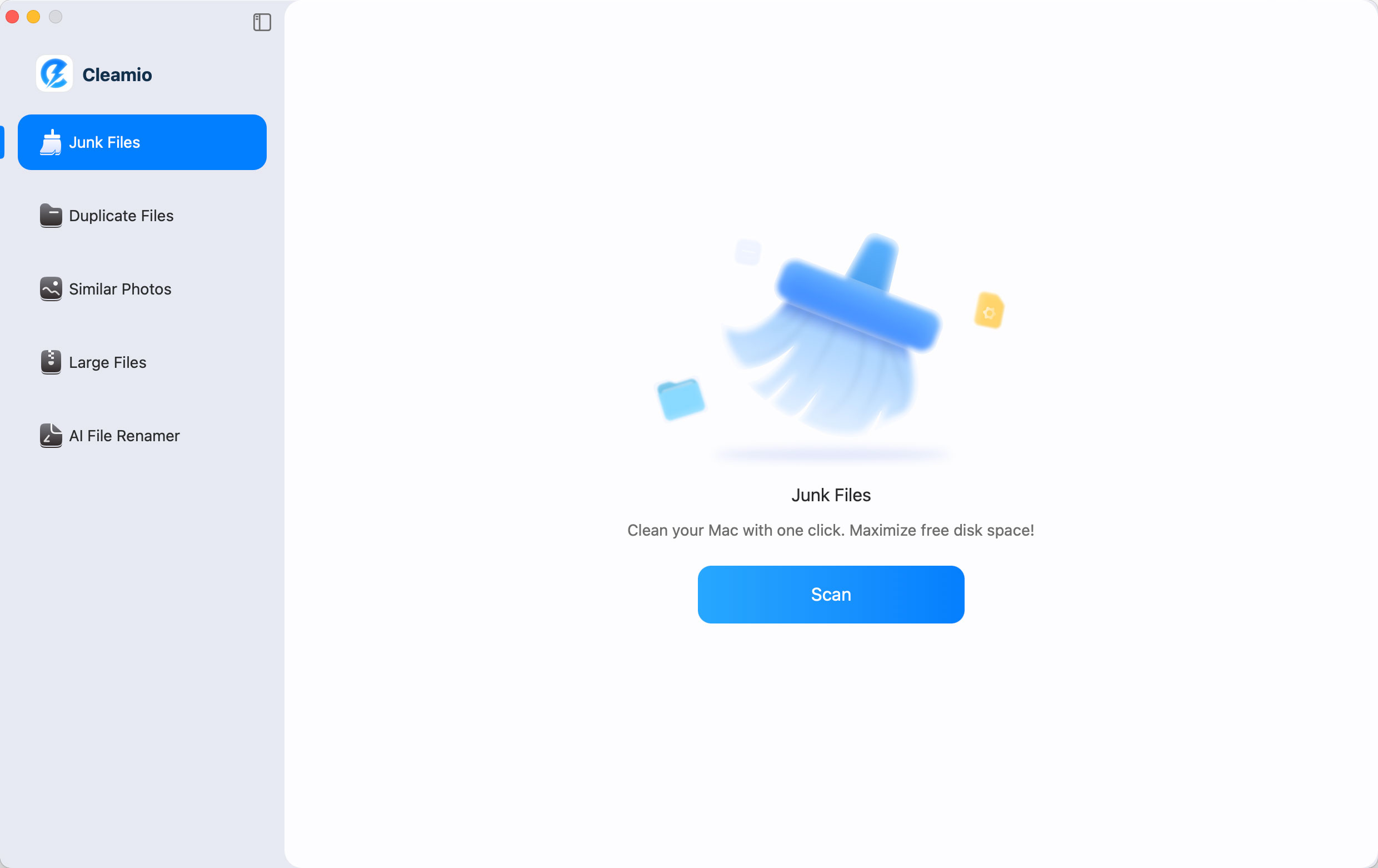
Download and open Tenorshare Cleamio. Click "Junk Files" and select "Scan" to quickly find all unnecessary files on your Mac.
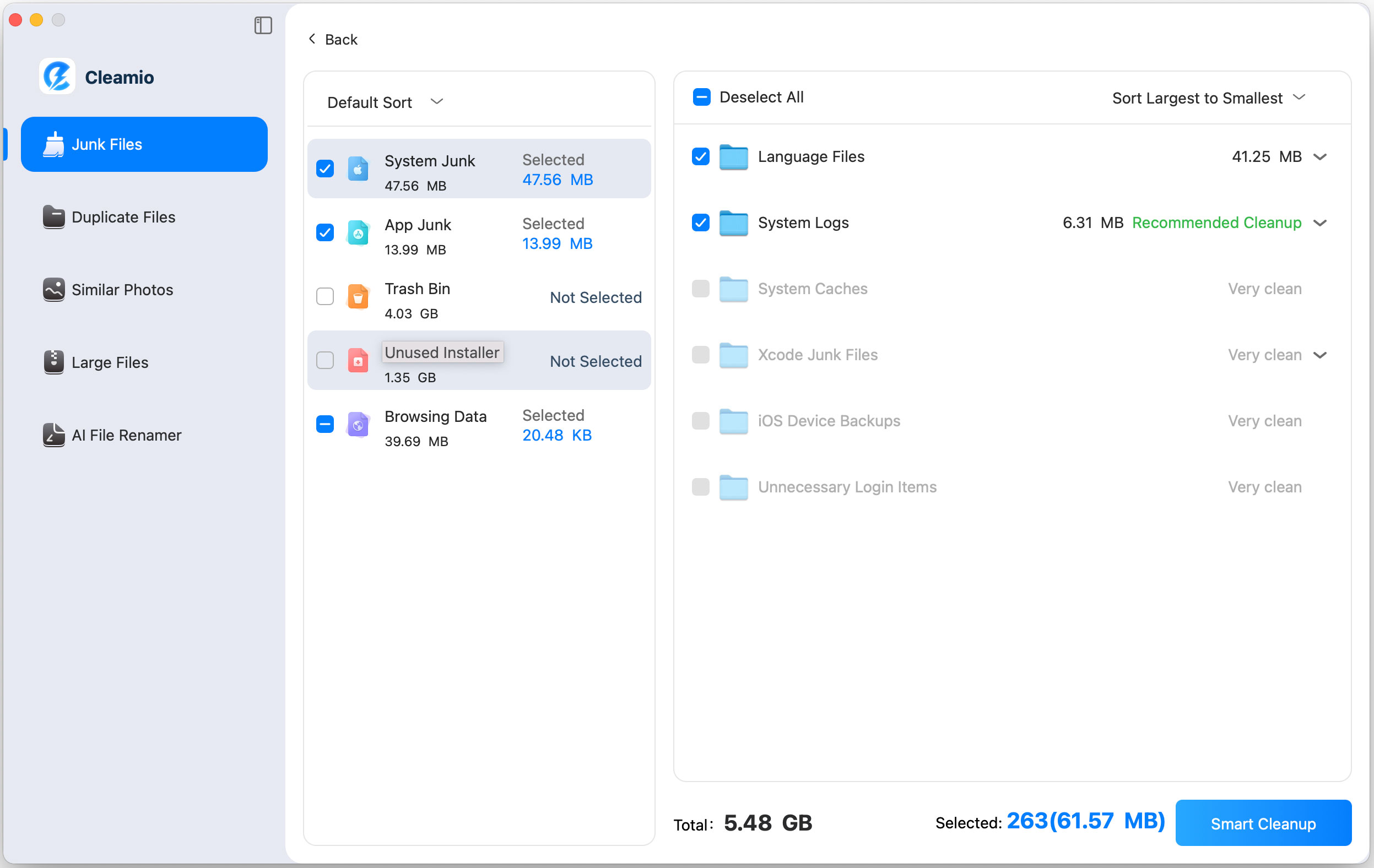
Review the scan results and click "Smart Cleanup". Cleamio safely removes selected junk files without affecting important data.
Cleanup completes in seconds. Your Mac gains more storage, runs faster, and feels smoother overall. Click "OK" to continue or explore other Cleamio features.
For the best results, run Cleamio regularly to prevent junk files from piling up and slowing down your Mac again.
Prevention is better than cleanup. Use these tips to avoid storage issues in the future:
Proper management ensures backups never overwhelm your storage again.
Yes. You can manually delete Time Machine backups using the Time Machine interface, Finder, or Terminal. Apple recommends using the Time Machine interface whenever possible.
If deletion fails:
Time Machine automatically creates hourly, daily, and weekly backups of your Mac. It deletes the oldest backups when space is needed, unless the disk is already full or restricted.
Deleting old and unnecessary Time Machine backups is one of the fastest ways to free up space on Mac and improve performance. When you delete Time Machine backups on Mac and snapshots correctly, your data remains safe while macOS runs smoothly. For deeper cleanup beyond backups,Tenorshare Cleamio is a smart choice. It removes hidden junk, boosts performance, and keeps your Mac clean, fast, and stress-free.
then write your review
Leave a Comment
Create your review for Tenorshare articles
 Cleamio
All-in-One Mac Cleaner & Optimizer
Share this post


Cleamio: All-in-One Mac Cleaner & Optimizer
Clean junk files, free up space, and boost Mac performance
No.1 Mac Cleaner & Optimizer
Clean, speed up, and optimize your Mac
By Jenefey Aaron
2026-09-15 / Mac Cleanup