

 iOS Tips & Latest Updates
 Bug Fixes, Unlock Guides
 Giveaways & Freebies

Cleamio: All-in-One Mac Cleaner & Optimizer
Clean junk files, free up space, and boost Mac performance
No.1 Mac Cleaner & Optimizer
Clean, speed up, and optimize your Mac
A Mac running slowly can turn simple tasks into frustrating waiting games. Apps take longer to open; the spinning beach ball appears constantly, and even browsing feels sluggish. Whether your Mac is new or several years old, performance issues can happen for many reasons. The good news? Most slowdowns are fixable with the right diagnosis and steps. Follow us and see why is your Mac running slow and how to fix it quickly.
Before applying fixes, it’s important to understand what might be causing the slowdown. Many users assume their Mac is “too old,” but in reality, performance issues are often related to storage, background processes, or outdated system settings.
Here are the most common reasons your Mac is running slowly:
Low disk space: macOS needs free storage to run smoothly. See: How to Get More Disk Space on Mac
Too many startup programs: Apps launching at boot consume memory.
High CPU usage from background apps: Hidden processes drain performance.
Too many browser tabs or extensions: Browsers are major memory consumers.
Outdated macOS version: Old systems may contain bugs or inefficiencies.
Large system caches and logs: Over time, temporary files accumulate. See: how to clear temporary files quickly
Time Machine local snapshots: These can silently consume storage space.
Hardware limitations (older Macs): Less RAM or older SSD/HDD.
Corrupted system settings: SMC/NVRAM issues, especially after updates.
Understanding these causes helps you target the right solution instead of guessing.
Before fixing anything, you should confirm what’s consuming resources. macOS provides built-in tools that allow you to monitor CPU, memory, and disk usage in real time.
Activity Monitor shows which apps or processes are consuming system resources. If your Mac is running slow, this is the first place to check.
Open Finder and go to “Applications” > “Utilities” > “Activity Monitor”.
Click the CPU tab to see which apps use the most processing power.

Click the Memory tab to check RAM pressure.
Click the Disk tab to review disk activity.
Low disk space is one of the most common reasons for performance issues. If your Mac has less than 15–20% free space, it may experience significant slowdowns. You can opt to optimize Mac storage using the built-in tool.
Click Apple Menu and choose “System Settings” > “General” > “Storage”.
Review the storage breakdown and identify large categories such as Apps or System Data.
Click “Optimize Storage” if needed to speed up your Mac.
Outdated macOS versions may contain bugs that affect performance.
Go to Apple Menu > System Settings > General > Software Update.

Check if updates are available and install the latest version if compatible.

If manual checks reveal junk buildup, full storage, or background clutter, a dedicated cleaner like Tenorshare Cleamio delivers the quickest results. This Apple-notarized Mac optimizer uses AI-powered scanning to safely remove hidden junk, free up GBs of space, and boost performance in one click—often recovering 20GB+ without risking important files. It's a strong alternative to manual cleanup or pricier tools.
Key features of Tenorshare Cleamio include:
Free up disk space by removing system caches, logs, app leftovers, and download residues.
Delete old and large files, duplicate files, and similar photos with advanced MD5 detection.
Clean system/app junk files, unused installers, and app leftovers after uninstalls.
Disable startup items and manage background apps to reduce boot time and resource drain.
Clear browser caches, cookies, and browsing data for faster web performance.
Real-time Mac monitoring (CPU, memory, disk usage) plus additional tools like file organization and trash cleanup.
Steps to Clean Up and Optimize Mac Speed Using Cleamio
Download, install, and launch Tenorshare Cleamio. Choose “Junk Files” from the left sidebar and click “Scan” afterward.
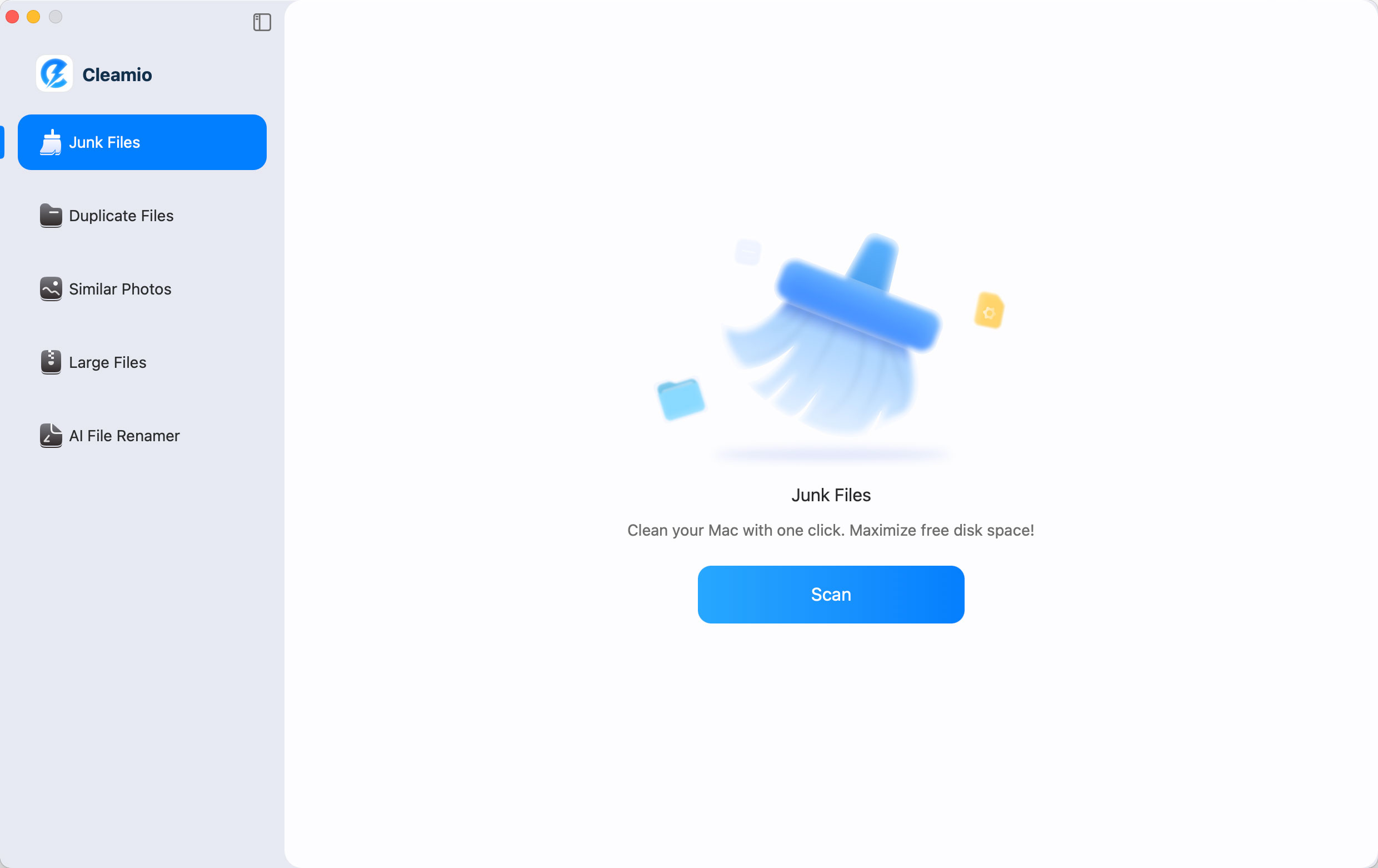

Besides, you can choose “Duplicate Files”, “Large Files”, and “App Management” to clear hogging-space items that make a sluggish Mac. Just with one click, you can fix the Mac performance issues.

Wait while it analyzes system and app junk files. Once the scan is complete, review the results and select the files you need to delete, then click "Smart Cleanup”.
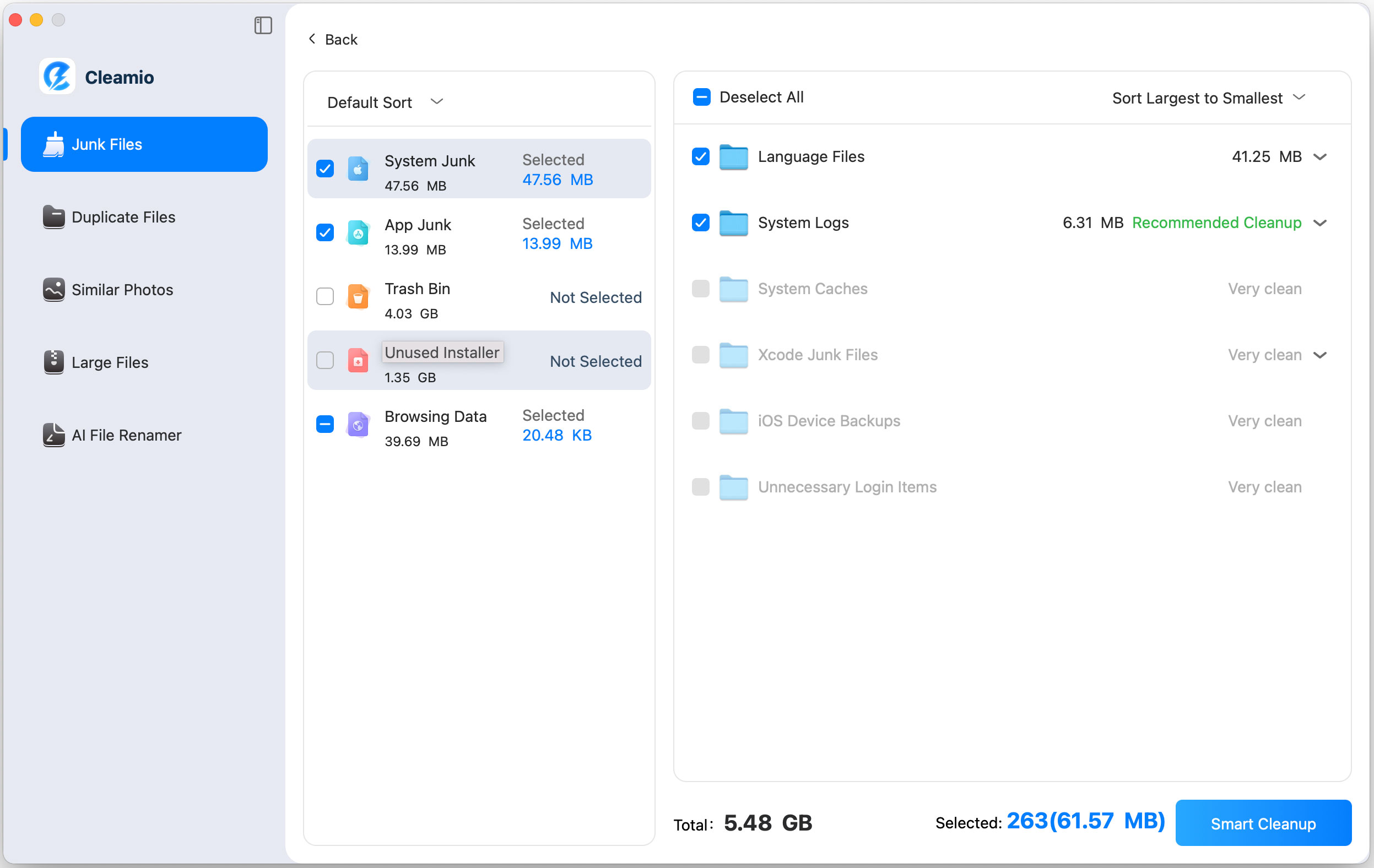
Once everything is removed, you can click "OK" and finish the process.
Within minutes, you can recover storage space and reduce system load significantly.
If you prefer manual solutions, there are several system-level adjustments that can improve performance. These methods require more effort but can be effective, especially for older Macs. Follow each method carefully to avoid removing essential files.
When enabled, this setting reopens all previously used apps at startup, increasing boot time and memory usage. Disabling it can noticeably speed up startup performance. This is especially useful if your Mac takes too long to boot.
Click Apple Menu and choose “Restart”.
Uncheck “Reopen windows when logging back in” and click “Restart”.

Local snapshots can consume large amounts of storage without obvious visibility. Removing them may instantly free up space. This helps when your Mac is running slowly because of low disk space.
First, temporarily disable automatic backups: Apple menu → System Settings → General → Time Machine → Options → set “Backup Frequency” to “Manually”.

Open “Terminal” via Spotlight: Cmd + Space, type Terminal.
and run “tmutil listlocalsnapshots /".
Delete outdated or unnecessary snapshots using: “sudo tmutil deletelocalsnapshots [date]" (replace [date] with e.g., 2026-03-01-123456 from the list; enter password when prompted).

macOS includes storage recommendations to remove unnecessary files. This is a safe way to free up space without third-party tools. It’s ideal for beginners who want to learn how to speed up mac performance.
Open “System Settings” and go to “Storage” inside the “General” section.
Review Recommendations and enable storage optimization features.

Over time, caches accumulate and may slow system performance. Removing them can refresh your system. However, delete only unnecessary folders.
Open Finder, then click “Go" from the top and choose “Go to Folder”.
Go to “~/Library/Caches” and delete non-essential folders.

Now repeat the process for “/var/logs” to clean your system logs.
Files remain stored until the Trash is emptied. Many users overlook this step. Clearing it frees storage immediately.
Right-click “Trash” from the dock on your Mac.
Select “Empty Trash” and confirm by clicking “Empty Trash” in the pop-up.
Animations and transparency effects can strain older hardware. Reducing them improves responsiveness. This is helpful for Macs with limited RAM when your Mac is running extremely slowly.
Open “System Settings” and go to “Accessibility", then click “Display”.
Enable “Reduce Motion” and “Reduce Transparency”.

Performance improvements are often included in updates. If your Mac runs slowly after the update, ensure all patches are installed.
Open System Settings and go to “General”, then open "Software Update”.
Install available updates.
If your Mac runs slowly after updating or the fan is constantly loud, resetting system controllers may help. This refreshes hardware-related settings. It’s commonly recommended for unusual performance issues on Intel Macs since the M-Series Macs are optimized to reset these automatically without needing a key combination.
Shut down your Mac.
Hold “Command + Option + P + R” for 20 seconds.

Release the keys and restart your Mac.
To reset SMC, you just need to shut down the desktop Macs and remove power for 30 seconds. For Laptops, you need to shut down and hold the power button for 10 seconds before turning the machine on.
If you prefer a faster, safer way, you can use Cleamio to handle these steps automatically.
Fixing slow performance is only part of the solution. Preventing future slowdowns ensures your Mac remains responsive.
A Mac running slowly is usually caused by storage overload, background processes, or outdated settings, not necessarily aging hardware. By diagnosing the issue and applying targeted fixes, you can restore performance quickly. For the simplest and most efficient solution, Tenorshare Cleamio offers automated cleanup and optimization to keep your Mac fast and responsive.


then write your review
Leave a Comment
Create your review for Tenorshare articles
 Cleamio
All-in-One Mac Cleaner & Optimizer
Share this post


Cleamio: All-in-One Mac Cleaner & Optimizer
Clean junk files, free up space, and boost Mac performance
No.1 Mac Cleaner & Optimizer
Clean, speed up, and optimize your Mac
By Jenefey Aaron
2026-10-20 / Mac Optimization