If you're wondering how to
get more disk space
on Mac, you're in the right place. Many Mac users run into storage limits over time, especially if they keep large media files, old apps, and system junk that silently eat up space. When your Mac starts warning about low storage, performance can drop and everyday tasks feel sluggish. It's important to reclaim space not just for peace of mind, but to keep your Mac running smoothly.
In this guide, we'll walk you through the smartest ways to get more disk space on Mac—from removing hidden system clutter and large files to clearing out unused applications and optimizing your cloud storage. And if you want the easiest, most automated solution, Cleamio helps you detect and remove unneeded files safely with just a few clicks. Whether you prefer built‑in tools or want a fast cleanup with Cleamio, you'll find tips here that are simple, effective, and safe for your Mac. Keep reading to reclaim your space and boost your Mac's performance!
Understanding where your storage is going is the first step to getting more disk space on your Mac. macOS provides built‑in storage insights that can help you see what categories are consuming storage.
Use macOS Storage Management Tool
Your Mac's storage overview shows categories like system files, apps, photos, and documents. Go to Apple menu > About This Mac > Storage > Manage to view recommendations for cleanup.
Review Large and Old Files
Within the storage tool, you can find large files or old items that you haven't touched in a while. Sorting by file size lets you focus on the biggest space hogs first, like old videos or backups.
Part 2: Clean Up System Junk and Temporary Files
System files, cache, and temporary data can quietly eat up several gigabytes on your Mac. Clearing these out is one of the best ways to get more space fast.
Manual System Junk Cleanup
System junk includes outdated files, caches, browser temp data, and old logs. You can remove some of these manually, but macOS doesn't offer a one‑click cleanup by default—making it tricky for most users.
Automate Cleanup with Cleamio
Cleamio scans your Mac for redundant system files, caches, logs, and more. It then presents safe cleanup options so you can free up space without risking important data. This automated approach is much quicker and safer than hunting through system folders by hand.
Part 3: Remove Unused Apps and Large Media Files
Unused applications and forgotten media files can build up over time and take up huge chunks of your disk. Removing them can instantly free up space.
Delete Apps and Leftover Files
You can delete apps by dragging them to the Trash or using Launchpad. But some app leftovers hide in your system and need deeper cleanup to remove fully.
Identify and Remove Large Media Files
Videos, photos, and music libraries often use up hundreds of gigabytes. Consider backing up important files to an external drive or cloud storage first, then use Cleamio to find and delete large or duplicate media files quickly.
Part 4: Optimize File Storage and Cloud Options
Move Important Files to External Drives or Cloud
If you have
large files
that you want to keep but don't need on your Mac every day, consider moving them to an external SSD or cloud service like iCloud, Google Drive, or Dropbox. This helps preserve your important data while freeing up local storage.
Identify files you want to backup, such as old videos, photo libraries, or archived documents.
Copy these files to your external drive or upload them to your preferred cloud storage service.
Verify the files are safely stored in the new location before removing them from your Mac.
Delete Unnecessary Files with Cleamio
Once you've backed up your important files, you can use
Cleamio
to safely remove unnecessary data from your Mac. Here's how:
Download and Launch Cleamio: Start by downloading and installing Cleamio on your Mac.
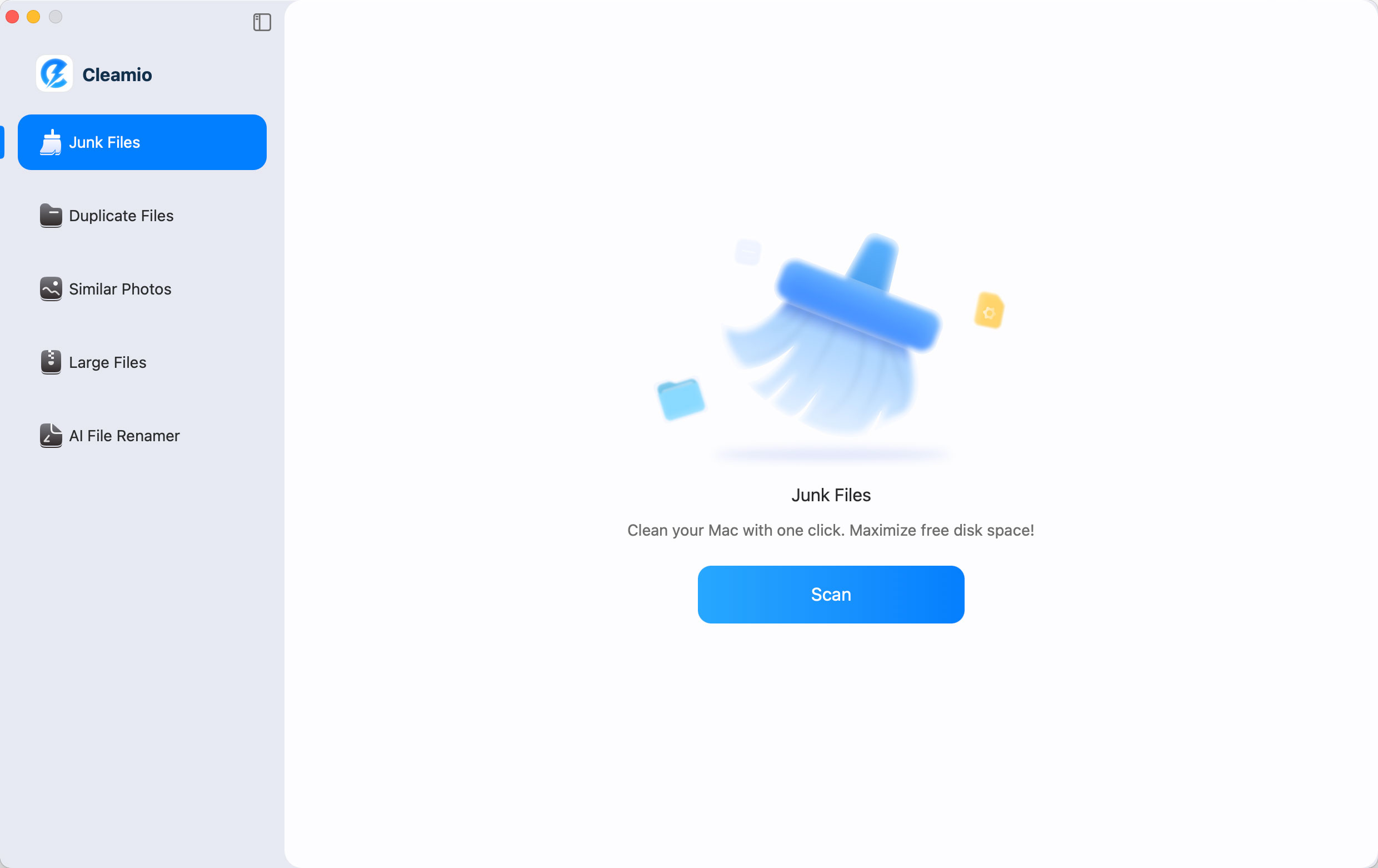
Scan for Junk Files: Open Cleamio and click on the "Scan" button to analyze your Mac's storage. The tool will quickly identify system junk, large files, duplicates, and other unnecessary data consuming space.
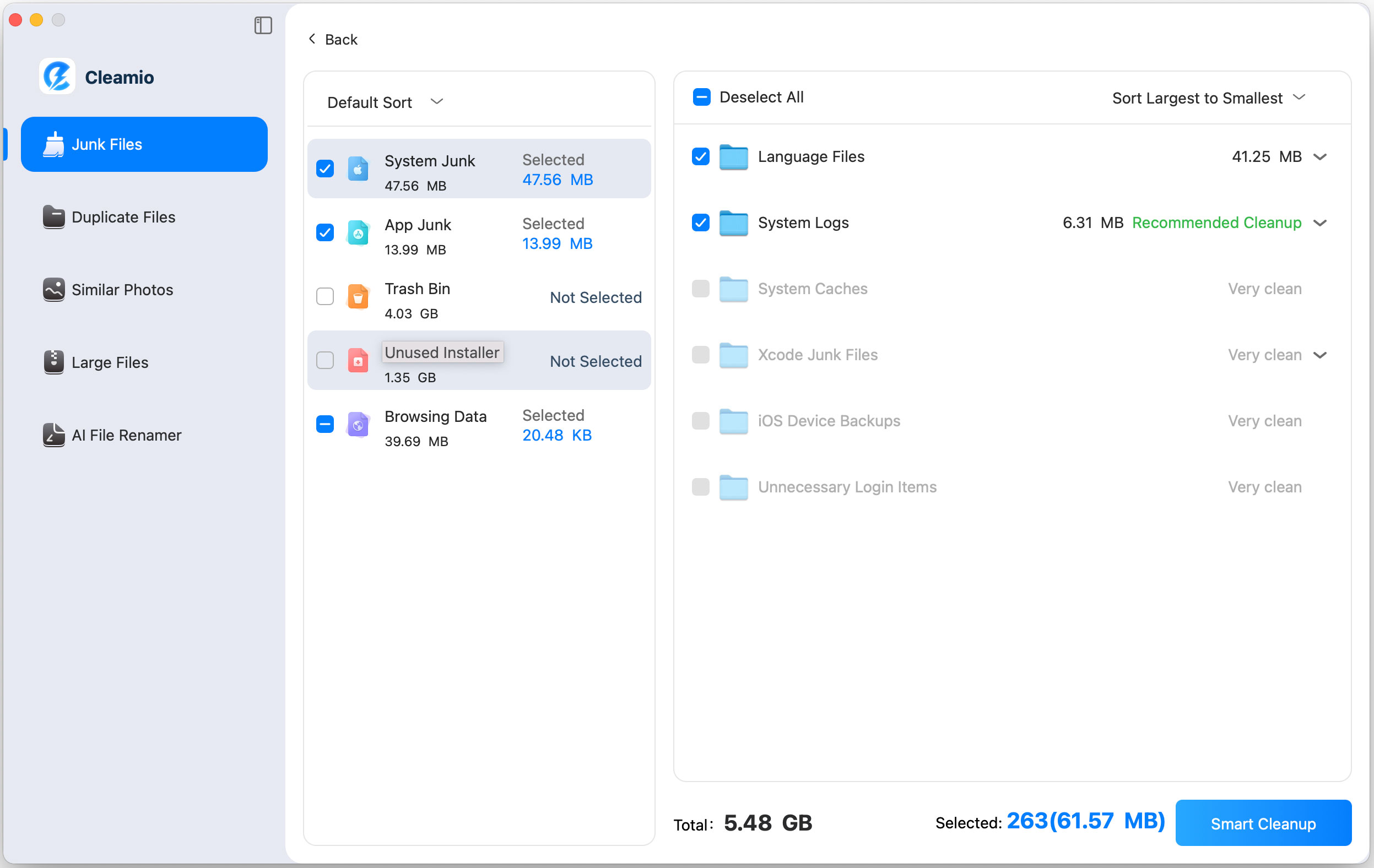
Review and Select Files: Once the scan is complete, browse through the categorized results. Cleamio will display system caches, old logs, duplicate files, and large media files. Select the items you want to remove.
Clean Up and Free Space: Click the "Smart Cleanup" button to safely delete the selected files. Cleamio will remove the unnecessary data, instantly freeing up valuable disk space on your Mac.
This simple process helps you efficiently remove clutter and reclaim storage space without manually searching through system folders.
Conclusion
Reclaiming storage and learning how to get more disk space on Mac doesn't have to be stressful. By checking what's using your storage, clearing out junk and unused files, deleting old apps and media, and using smart tools like Cleamio, you can free up significant space and improve your Mac's performance.
If you want an easy, automated cleanup tool, Cleamio is worth trying—it helps uncover hidden clutter and gets rid of unnecessary files safely. Start with checking your Mac's storage breakdown, then follow the cleanup steps above to make your Mac feel fresh again.





 iOS Tips & Latest Updates
 Bug Fixes, Unlock Guides
 Giveaways & Freebies




By Jenefey Aaron
2026-09-28 / Mac Cleanup