A slow Mac can be annoying, especially when the simple tasks begin to drag.
You are not alone if you’re wondering
how to speed up MacBook Pro and Air.
Over time, an extremely fast machine can slow down due to junk, running
applications, and outdated backgrounds. The positive thing is that you do not
have to change your device. With the correct adjustments and tools, you may
get your Mac fast once again.
Many consumers have been grumbling that the MacBook has become terribly
slow, though it used to work well in the past. This normally occurs as a
result of both software and hardware causes.
Common Reasons Your Mac is Running Slow
Too many startup and background apps
Poor storage due to
junk files, caching, and leftovers.
Outdated macOS or apps
Heavy visual effects on older Apple computers
Insufficient RAM for modern apps
Aging hardware in older MacBook models
Once these pile up, performance drops. The next sections focus on practical
ways to fix this and speed up a MacBook without stress.
Basic Quick Tips to Make Mac Run Faster (Works for both New and Old
MacBooks)
Restarting also deletes the temporary memory and halts background processes
that hang. It is extremely easy, but nobody pays attention to it.
Steps:
Restart: Apple menu > Restart.
Update: System Settings > General > Software Update
(install any available macOS updates).
For apps: App Store > Updates tab.
2. Clean Junk Files, Caches, and Browsing Data in One Click
With time, your Mac accumulates system garbage, app caches, installer
garbage, browsers, and Trash history. These consume storage, and slack
everything.
This is where
Tenorshare Cleamio
stands out. It is designed to help users who want to know how to clean and
speed up MacBook without manual hassle.
This makes it ideal for anyone asking how to make a MacBook run faster.
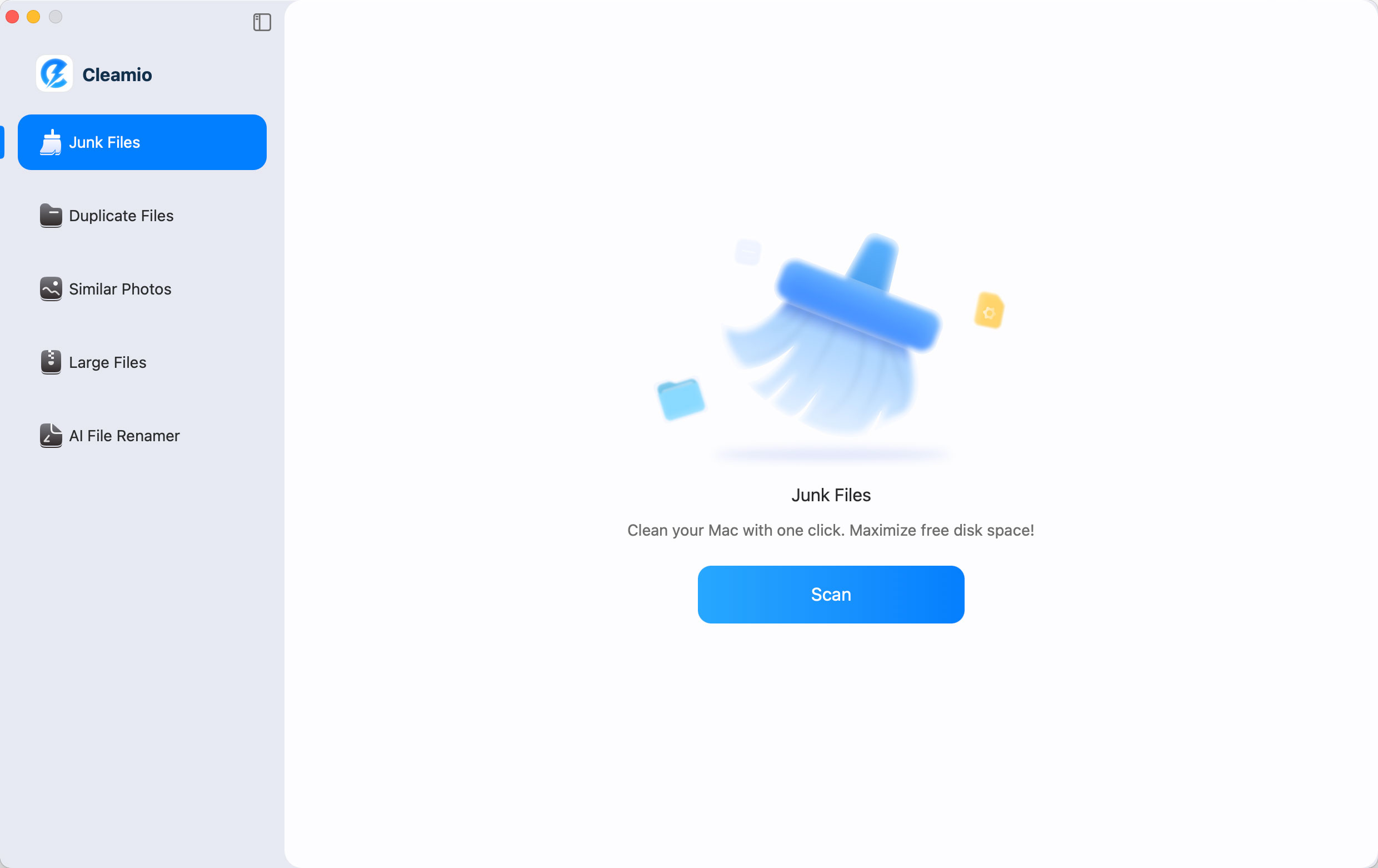
Steps to clean Mac junk files using Cleamio:
Download and install
Tenorshare Cleamio. Go to “Junk Files” and click the “Scan” button to start finding system
and app junks as well as hidden caches.
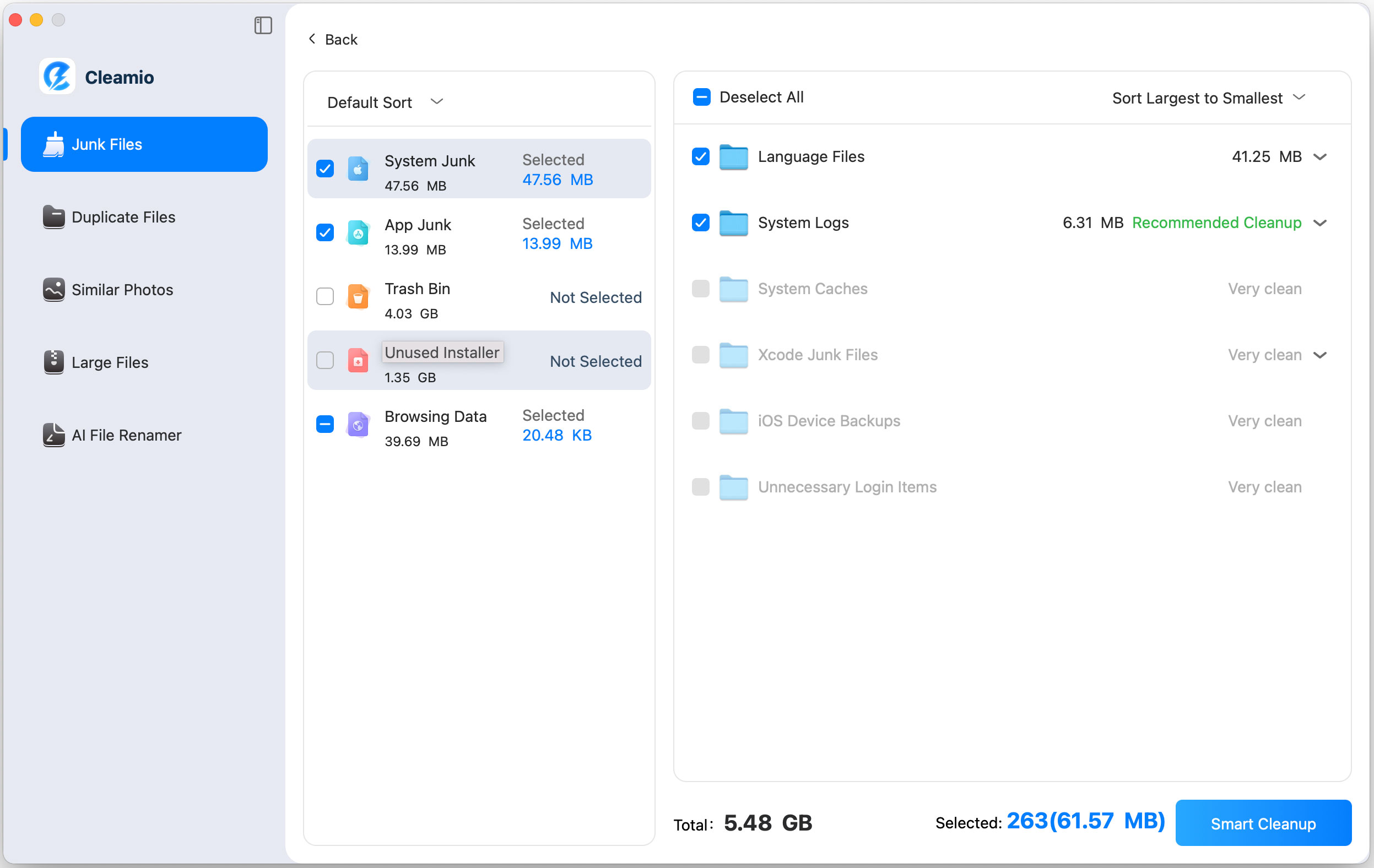
After scanning, all detected junk items (system junk, app junk, Trash,
unused installers, and online browsing data) will be displayed. You can
sort them by size, time, more.
Select those junk items you want to clean up and click “Smart Cleanup”.
3. Remove Login and Startup Items
TUnnecessary apps launching at startup consume RAM and CPU, slowing boot
times and overall performance, especially on older MacBook Air and Pro
models.
In the "Allow in the Background" section, toggle off unneeded processes.
4. Reduce Visual Effects and Switch Browsers
macOS's transparency, animations, and effects look great but use GPU/CPU
resources, slowing older Apple computers or even MacBook Air 2020 models
under load. Reducing them frees resources. Also, switch from resource-heavy
browsers like Chrome to Safari for better speed.
Steps to reduce effects:
Click on System Settings > Accessibility > Display.
Turn on the “Reduce motion" (simplifies animations) and "Reduce
transparency" (removes blur effects).
For Dock: System Settings > Desktop & Dock > Minimize windows
using: "Scale" (faster than Genie). Also, uncheck "Animate opening
applications."
These tweaks help speed up old MacBook Pro and Air, making your Mac run like
new without hardware changes.
How to Speed Up MacBook Pro and Air (4 Advanced Ways For M1–M4 and
Intel-based MacBooks)
For deeper improvements on older MacBook Air/Pro (Intel) or even M-series
like MacBook Air M1 or Pro 2020/2022/2024, these hardware/software methods
work well.
Way 1. Upgrade HDD to SSD (Most proven way to speed up an old MacBook)
Old Intel MacBooks often have slow HDDs, swapping to an SSD dramatically
boosts read/write speeds (up to 10x faster boot/apps), making older
computers feel new.
Steps (for upgradable models, e.g., 2012 or earlier):
Use iFixit guides for your model to open and replace drive.
Clone old drive to new SSD (Carbon Copy Cloner).
Install SSD, reassemble.
This is highly effective to speed up old MacBook Pro and Air.
Way 2. Maximize RAM Upgrade (8GB or 16GB)
More RAM allows better multitasking, crucial for how to make MacBook Air run
faster on older models. Low RAM causes swapping to disk, slowing everything.
Steps:
Check compatibility: Verify your MacBook model supports RAM
upgrades (most 2012-2015 models do; 2016+ models typically don't)
Purchase compatible RAM: Buy the correct type (DDR3/DDR4) and
maximum capacity for your model
Power off completely and disconnect all cables
Remove bottom case using appropriate screwdriver
Release old RAM by pushing retaining clips outward
Insert new RAM at 45-degree angle, then press down until clips snap
Way 3. Repaste CPU/GPU and Clean Fans (For old MacBooks only)
Dust buildup and dried paste cause overheating/throttling on Intel models,
reducing speed. Fresh paste improves heat transfer, allowing sustained
performance; cleaning fans prevents thermal limits. This method is best for
older MacBook Pro/Air overheating.
Steps:
Disassemble to access logic board/fans.
Clean dust with compressed air.
Remove old paste (isopropyl alcohol), apply new (e.g., Arctic MX-6).
Reassemble carefully.
Way 4. Clean Install macOS
Removes accumulated bloat/conflicts for a fresh start. Eliminates junk,
optimizes files, great for how to make my Mac quicker on any model.
Check battery health (MacBooks): poor battery can throttle
performance.
Use an SSD only: avoid external booting from slow drives.
Control browser tabs & extensions: major RAM and CPU drain.
Keep your Mac cool: clean vents, avoid blocking airflow.
These habits help maintain and speed up MacBook performance consistently.
People Also Ask About Speeding Up MacBook
Q1: How do I clear the cache and speed up my Mac?
Clearing cache can be done manually, whereas tools such as Cleamio by
Tenorshare do it by clicking a button.
Q2: Do Macs need to be defragged?
No. Modern Macs use SSD + APFS, which automatically manages file layout.
Defragmenting is unnecessary and can reduce SSD lifespan.
Q3: Does upgrading RAM speed up a Mac?
Yes, if you multitask, use heavy apps, or hit memory pressure. Big
improvement for Intel Macs with upgradeable RAM. Apple Silicon (M1/M2/M3) →
RAM is not upgradeable; buy enough upfront.
Q4: What is the best terminal command to speed up a Mac?
There is no single command. It is much better to clean junk files and
control the start-up apps.
Conclusion
In case you are serious about how to speed up MacBook Pro and Air,
begin with easy repairs and maintenance. Most users find that cleaning junk
files makes the biggest difference.
An easy, secure, user-friendly method of adding speed without having to be a
technical genius is provided by Tenorshare Cleamio. Add smart
settings and upgrades, and your Mac can be smooth and responsive once more.






 iOS Tips & Latest Updates
 Bug Fixes, Unlock Guides
 Giveaways & Freebies





By Jenefey Aaron
2026-09-28 / Mac Optimization