If your Mac is running slow or storage is mysteriously filling up, temporary
files could be the hidden cause. Knowing how to
delete temporary files on Mac can instantly free up space and
improve performance. In this guide, you’ll learn where these files are stored
and how to remove them safely using both automatic and manual methods.
Part 1. What Are Temporary Files on Mac and Where Is the Temp Folder?
What Are Temp Files on Mac
Temporary files (also called cache or temp files) are short-term data
created by macOS and apps to store information quickly. These files help
apps load faster and remember settings, but they aren’t meant to stay
forever.
Part 2. Easiest Way to Automatically Delete Temporary Files on Mac in One
Click
Manually finding and deleting temp files can be time-consuming and risky if
you remove the wrong files. That’s why using an automated cleaner is the
easiest and safest option for beginners who want quick results without
technical steps.
Tenorshare Cleamio
is a powerful Mac cleaning tool that can scan and remove all types of
temporary files in one click. It intelligently identifies which files are
safe to delete, helping you avoid accidental system issues.
It supports a deep scan for system cache, app junk, and temp files. Cleamio
is designed for smart detection of unnecessary files that are safe to
remove, and it cleans browser cache across all browsers simultaneously. You
can use it for removing logs, leftover files, and unused installers with a
one-click cleanup with a beginner-friendly interface.
Steps to Clean Temp Files & Other Junk Files on Mac with Cleamio
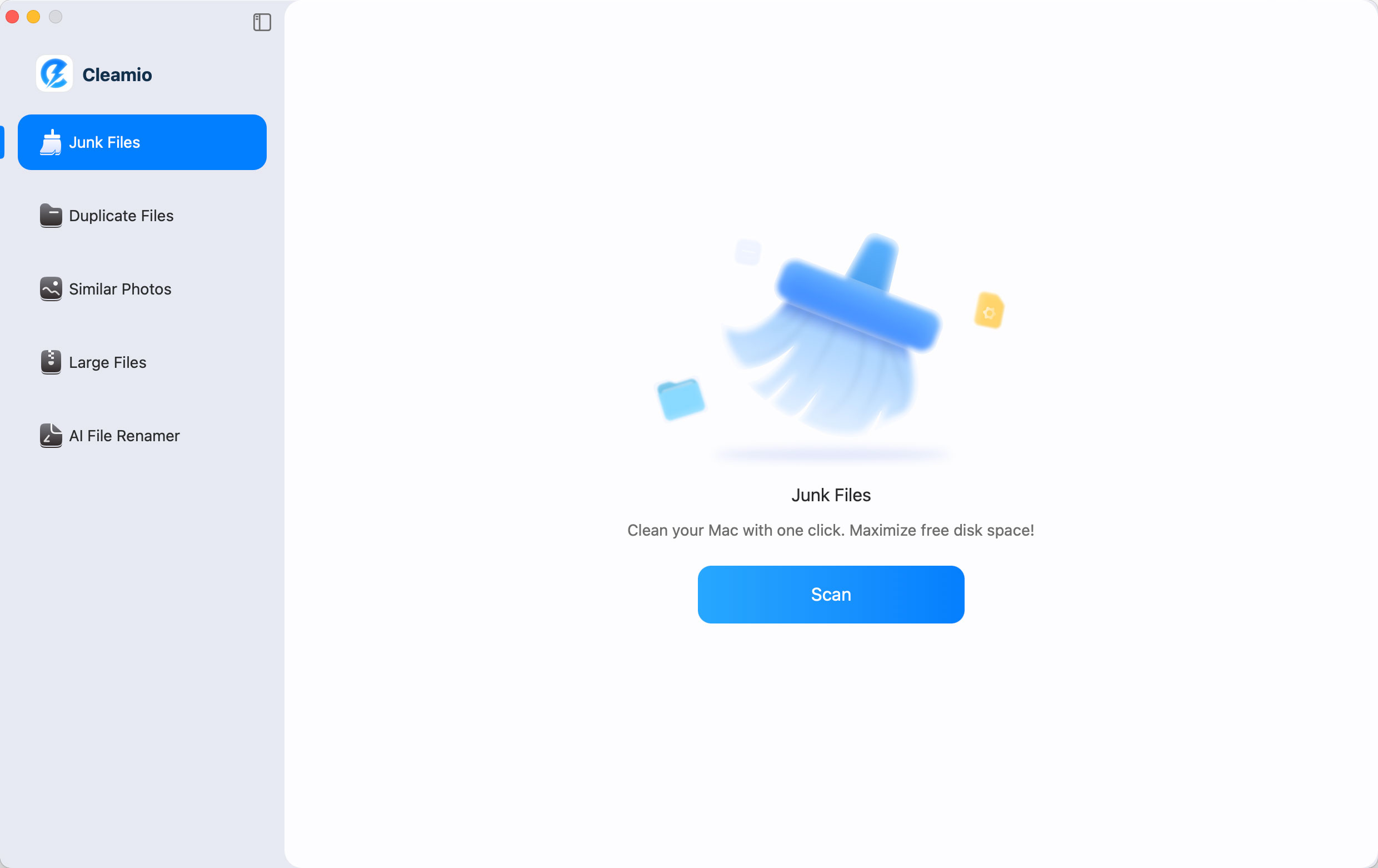
Download and install Tenorshare Cleamio. Launch the app and select “Junk
Files," then click “Scan” to detect temporary and junk files.
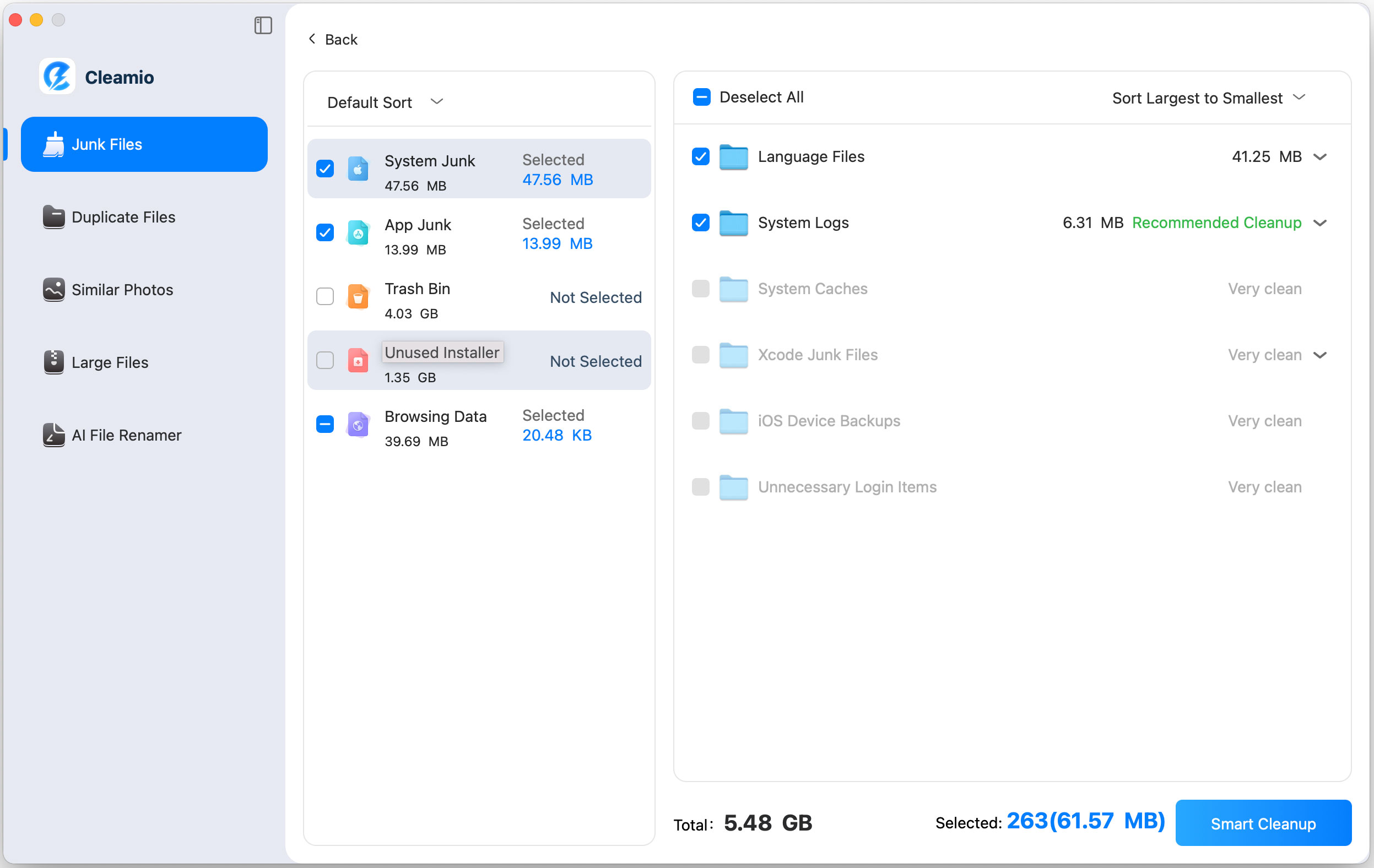
Check scan results and select files to delete. You can select the Temp
files as well as other unnecessary files from different locations and
click “Smart Cleanup” to begin cleaning.
When the cleaning is complete, click "OK," and you are done.
This method is ideal if you want to clean temp files on a Mac quickly
without navigating hidden folders.
Part 3. How to Find & Clear Temporary Files on Mac? 5 Manual Proven
Methods
If you prefer manual control, there are several effective ways to locate and
remove temporary files on a Mac. Each method targets different types of temp
files, so combining them can give you the best results when trying to erase
temporary files on Mac efficiently.
1. Delete Temp Folder in Finder
One of the most direct ways to delete temporary files on Mac is by accessing
cache folders through Finder. This method gives you full control over what
gets removed, making it ideal for users who want to manually inspect files
before deletion. However, you should proceed carefully to avoid removing
important system data.
Open Finder and press “Command + Shift + G” then enter
“~/Library/Caches/”.
Browse folders and delete unnecessary files, then empty Trash to complete
removal by right-clicking Trash in the dock and selecting "Empty Trash”.
Browsers store a large amount of temporary data, such as images, scripts,
and cookies, to speed up loading times. Over time, this cache can grow
significantly and take up valuable space. Clearing browser cache is one of
the quickest ways to remove temporary files and improve browsing performance
on your Mac.
Here we will discuss steps for the Safari browser, and these may be slightly
different for your browser if you are not using Safari.
Open Safari browser and click "Safari" from the menu bar, then go to
"Settings" and choose the "Privacy" tab.
Select “Manage Website Data” and click “Remove All."
3. Use macOS Storage Optimizing Tool
macOS includes built-in storage management tools designed to help users
identify and remove unnecessary files. This method is perfect for beginners
to remove temporary files on Mac because it provides guided recommendations
without requiring manual navigation of hidden folders. It can help clean
temporary files while also organizing large amounts of unused data
efficiently.
Open your Mac's Settings and go to "General," then open "Storage."
Use recommendations like "Store in iCloud", “Optimize Storage”, and "Empty
Bin Automatically."
4. Delete Temp Files on Mac Using Terminal
For advanced users, Terminal offers a powerful way to access and clean temp
files on a Mac quickly. This method allows you to directly open system temp
directories and delete files in bulk. While efficient, it requires caution
since deleting the wrong files may affect system stability or application
performance.
Open Terminal and run the command: “rm -rf temp_file_path” where you will
replace temp_file_path with the real path, like "~/Library/Caches/Music."
Be careful not to remove essential system files
5. Restart or Boot into Safe Mode
Sometimes the simplest method is also effective. Restarting or using Safe
Mode can automatically delete temporary files on Mac and system caches. This
approach is especially useful if your system feels sluggish, as macOS
performs cleanup processes during startup without requiring manual
intervention from the user.
Restart your Mac normally by clicking "Apple" then choosing "Restart."
For Safe Mode, hold Shift during startup and let macOS clean system caches
Restart again to exit Safe Mode
Part 4. Is It Safe to Delete Temporary Files on Mac? Should You Delete Them?
Is it safe to delete temporary files on a Mac? In most cases, yes. Temporary
files are designed to be disposable, so deleting them will not remove
important personal data. However, you may notice that some apps load
slightly slower the first time after clearing the cache.
What Temp Files Should You Delete vs What Should You Keep?
Please swipe to view
Safe to Delete
Keep / Be Careful
browser cache files
active application data
system logs
system configuration files
temporary installation files
files currently in use
app cache
unknown system folders
old update leftovers
critical hidden files
Part 5. How to Prevent Temporary Files from Building Up Again?
To avoid constantly cleaning your Mac, follow these practical tips:
These habits help maintain performance and prevent excessive buildup.
People Also Ask about Mac Temporary Files
Q1: Will deleting temp files slow down my Mac?
No, deleting temp files will not slow down your Mac. In fact, it usually
improves performance by freeing up space and removing unnecessary data. Apps
may load slightly slower the first time after cleaning, but overall speed
improves.
Q2: How to delete temp files from MacBook Air?
You can delete temp files from a MacBook Air using Finder, browser settings,
or built-in storage tools. For a quicker solution, use a cleanup tool like
Cleamio to remove all temporary files automatically in one scan.
Q3: How to delete Adobe Acrobat temporary files on Mac
Adobe Acrobat stores temporary files in cache folders within the Library
directory. You can delete them by navigating to ~/Library/Caches/Adobe/ and
removing unnecessary files, or use a cleanup tool to clear them safely.
Q4: How to delete Photoshop temporary files on Mac
Photoshop creates temp files during editing sessions, often stored in
scratch disk locations. You can remove them manually or clear Photoshop
cache via Preferences, or use a system cleaner to delete leftover temp files
efficiently.
Q5: How to find temporary Excel and Word files on Mac?
Temporary Office files are usually stored in hidden folders like
~/Library/Containers/. You can locate them using Finder search or access the
Library folder directly. These files are safe to delete if no documents are
open.
Q6: How to remove junk files from Mac without software?
You can remove junk files manually by clearing cache folders, deleting
browser data, and using macOS storage tools. However, this process takes
time and requires caution to avoid deleting important system files.
Conclusion
Learning how to delete temporary files on Mac is essential
for maintaining speed and freeing storage. While manual methods work, they
can be time-consuming and complex. For a faster and safer solution,
Tenorshare Cleamio
offers a one-click cleanup to remove all temporary files and keep your Mac
running smoothly.






 iOS Tips & Latest Updates
 Bug Fixes, Unlock Guides
 Giveaways & Freebies





By Jenefey Aaron
2026-09-28 / Mac Cleanup