Upgrading your iCloud storage should give you more room for photos, documents,
backups, and other data. It should not normally make your files disappear.
However, some users may notice that files seem to be missing after upgrading
their iCloud storage or changing their iCloud settings.
The good news is that a storage upgrade itself usually isn't the reason your
files are gone. In many cases, the files are still available but aren't
showing where you expect them to. Syncing problems, a different Apple Account,
disabled iCloud Drive, accidental deletion, or files being stored locally can
all cause confusion.
Why Are My Files Missing After Upgrading iCloud Storage?
There are several reasons files may appear to disappear after an iCloud
storage upgrade.
1. iCloud Drive Has Not Finished Syncing
When you make changes to your iCloud account, your devices may need some
time to synchronize. This can be especially noticeable when you have a large
number of files.
2. You're Using a Different Apple Account
Your iCloud files are associated with your Apple Account. If you've
accidentally signed into another account, the files from your previous
account won't appear in iCloud Drive.
3. iCloud Drive Is Turned Off
If iCloud Drive is disabled, files stored in iCloud may not appear normally
in the Files app.
Check your iCloud settings and make sure iCloud Drive is enabled. If you
recently changed devices or settings, this is particularly worth checking.
4. The Files Were Deleted or Moved
It's also possible that the files weren't lost at all. They may have been
accidentally moved to another folder or deleted.
5. The Files Were Stored Locally on Your Device
Not every file on an iPhone, iPad, or Mac is automatically stored in iCloud.
For example, files saved under On My iPhone or On My iPad are stored locally
rather than in iCloud Drive. Increasing your iCloud storage capacity does
not automatically move every locally stored file to iCloud.
6. A Temporary iCloud or System Issue Occurred
Sometimes a temporary synchronization problem can make files appear missing
even though they still exist in your account.
How to Find Missing Files After iCloud Storage Upgrade
Before trying more advanced recovery methods, work through these basic
checks.
Method 1: Check iCloud Drive in the Files App
The first place to look is the Files app on your iPhone or iPad.
Open Files, tap Browse, and select iCloud Drive.
Browse through the folders or use the search field to look for the missing
file.
If you find it in another folder, you can move it back to the location where
you normally keep it.
Method 2: Check Recently Deleted
If you accidentally deleted
a file, it may still be recoverable.
Open the Files app and go to Browse and go to Recently Deleted folder.
Look through the available files and select the one you want to recover.
If the file is still within the available recovery period, choose Recover.
It should return to its previous location.
Method 3: Check iCloud Drive on
iCloud.com
Checking iCloud from the web is another useful way to determine whether the
problem is limited to your device.
Sign in to
iCloud.com
using the same Apple Account and open iCloud Drive. Search for the missing
file and check the folders carefully.
You can also check the Recently Deleted area if the file isn't in iCloud
Drive.
If the file appears on
iCloud.com
but not on your iPhone or iPad, that suggests the problem may be related to
synchronization or the device rather than the file being permanently lost.
Method 4: Check Your iCloud Drive Settings
If the files still aren't appearing, review your iCloud settings.
On an iPhone or iPad, open Settings, tap your Apple Account, and select
iCloud. Make sure iCloud Drive is enabled.
After enabling it, connect to Wi-Fi and give the device time to
synchronize. Avoid repeatedly switching the setting on and off because
this can make it harder to determine whether synchronization is
progressing normally.
Method 5: Restart Your Device and Allow iCloud to Sync
A simple restart can sometimes resolve temporary synchronization problems.
Restart your iPhone, iPad, or Mac and reconnect it to a stable Wi-Fi
network. If you're dealing with a large number of files, keeping the
device connected to power can also be helpful.
Give iCloud enough time to synchronize before assuming the files have been
permanently lost.
How to Recover Files That Are Still Missing After Checking iCloud
If you've searched iCloud Drive, Recently Deleted, and
iCloud.com
but still can't find your files, you may need to look at other recovery
options.
Option 1: Restore Files from Recently Deleted
Recently Deleted is the easiest recovery option when the files were deleted
accidentally and are still available there.
Open the Recently Deleted folder.
Simply select the files and use the recovery option to return them to
iCloud Drive.
However, if the files have already been permanently removed from Recently
Deleted, this method will no longer work.
Option 2: Restore from an Available Backup
If you have another backup or copy of the missing files, you may be able to
restore them from there.
Before doing this, it's important to understand the difference between
iCloud Drive synchronization and
iCloud Backup. Files that are already synchronized with iCloud Drive are handled
differently from data included in an iPhone or iPad backup.
Option 3: Recover Missing Files with Tenorshare UltData
When the normal Apple recovery methods don't locate your files, a dedicated
recovery application such as
Tenorshare UltData
may be worth considering.
UltData is designed to search supported iOS devices and backup sources for
recoverable data. It can be useful when a file or other information is no
longer visible through the normal Files app or iCloud interface.
Here is a step-by-step guide for you to recover any lost data with the help
of Tenorshare UltData recovery tool.
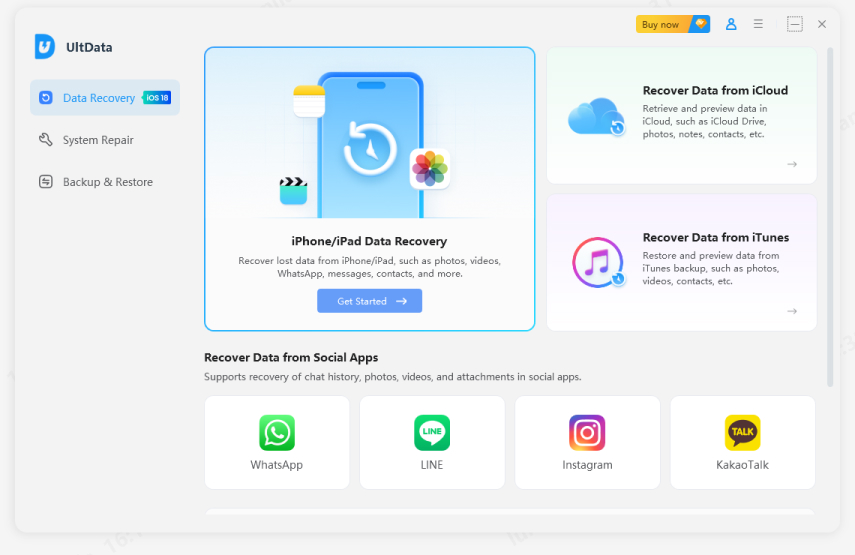
Download and install the Tenorshare UltData recovery tool and select
"iPhone/iPad Data Recovery" to proceed the recovery.
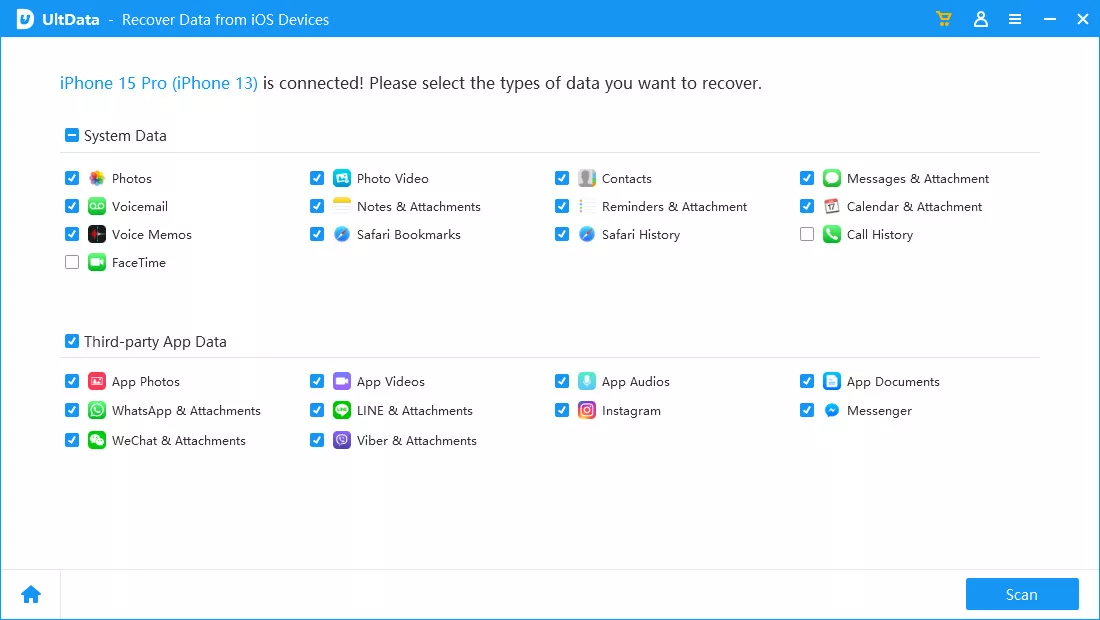
Select the file types that are needed to be recovered from the device.
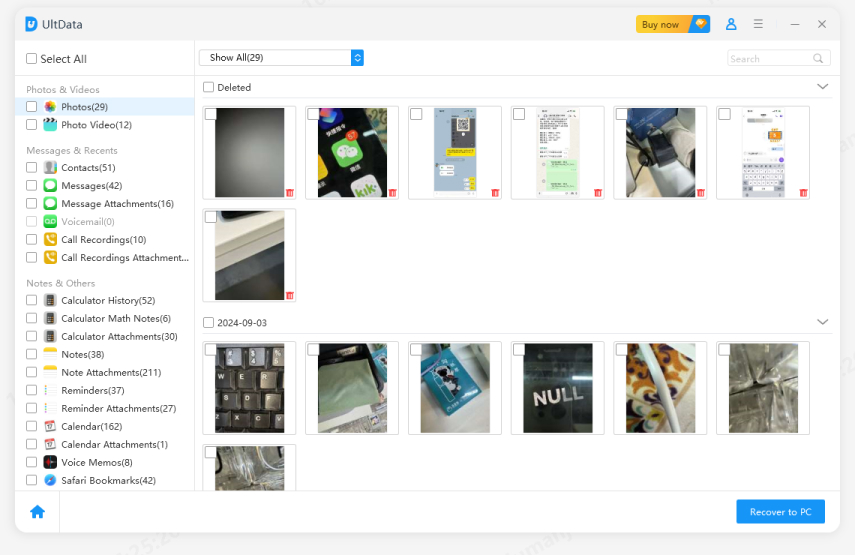
Click scan and let the tool scan the device and find your lost files.
Select the recovered files and click Recover to PC for the smooth
recovery. You can move files from there to your device as well.
Conclusion
If files are missing after an iCloud storage upgrade, don't panic.
Increasing your iCloud storage capacity does not normally delete your
existing files. The problem is more likely related to synchronization,
account settings, iCloud Drive, accidental deletion, or files being stored
locally.
Start by checking iCloud Drive in the Files app and looking in Recently
Deleted. Then sign in to
iCloud.com
to see whether the files are still stored in your account. If necessary,
review your iCloud Drive settings and restart your device to give
synchronization another chance.
If the files remain missing, check available backups or consider a recovery
tool such as Tenorshare UltData. Acting quickly and avoiding unnecessary
changes to the device can improve your chances of recovering important
missing data.








 iOS Tips & Latest Updates
 Bug Fixes, Unlock Guides
 Giveaways & Freebies





By Jenefey Aaron
2026-10-14 / iOS Data Recovery