If your Mac takes too long to open apps, freezes when switching windows, or
frequently shows the spinning beach ball, you’re not alone. Macs are built for
performance, but over time, storage fills up, background apps accumulate, and
system settings become inefficient. The result is lag, overheating, and slower
response times.
The good news? You don’t need technical skills to fix it. This article
explains how to improve Mac performance using quick cleanup methods, manual
optimization tips, and gaming performance tweaks.
Part 1. Why Is My Mac So Laggy and Slow (Diagnose Performance Issues)
Most Mac slowdowns happen gradually. At first, you may notice longer startup
times, slower app launches, loud fans, extra heat, or lag when multitasking.
These are all signs that your Mac needs maintenance.
Common reasons a Mac becomes slow
1. Low available storage: When your startup disk is almost
full, macOS can struggle to handle temporary files, app data, and system
tasks efficiently. See:
How to Optimize Storage on Mac: Best Tips and Tricks
2. Too manylogin items: Apps that launch automatically at startup can consume CPU, memory, and
disk activity before you even begin working. See:
3. Outdated macOS or apps: Software updates often include
security patches, stability fixes, and performance improvements.
4. Resource-heavy background processes: Some apps continue
syncing, indexing, scanning, or updating in the background. These processes
can quietly eat up RAM and processor power. Activity Monitor can help you
spot them.
5. Browser overload: Too many tabs, extensions, and web
apps can drain memory fast, especially in Chrome.
6. Visual overhead on older Macs: Animations, transparency,
and motion effects can make older systems feel less responsive. Reducing
those effects can help.
Identifying these issues is the first step in macOS performance
optimization.
Part 2. Best Way to Clean Up Your Mac and Optimize Mac Performance in One
Click
When your Mac is cluttered with junk files, manual cleanup can be
time-consuming and inefficient. The best way to improve Mac performance
instantly is by using a smart, automated tool that handles everything in one
go. This is where
Tenorshare Cleamio
stands out as a powerful macbook optimization software designed for fast and
safe cleanup.
Tenorshare Cleamio uses advanced AI and the MD5 Message-Digest Algorithm to
deeply scan your system and safely remove unnecessary data. It helps
increase Mac performance, free up storage, and eliminate lag without risking
important files.
Privacy cleanup for browsing traces and hidden files
Steps to Use Tenorshare Cleamio:
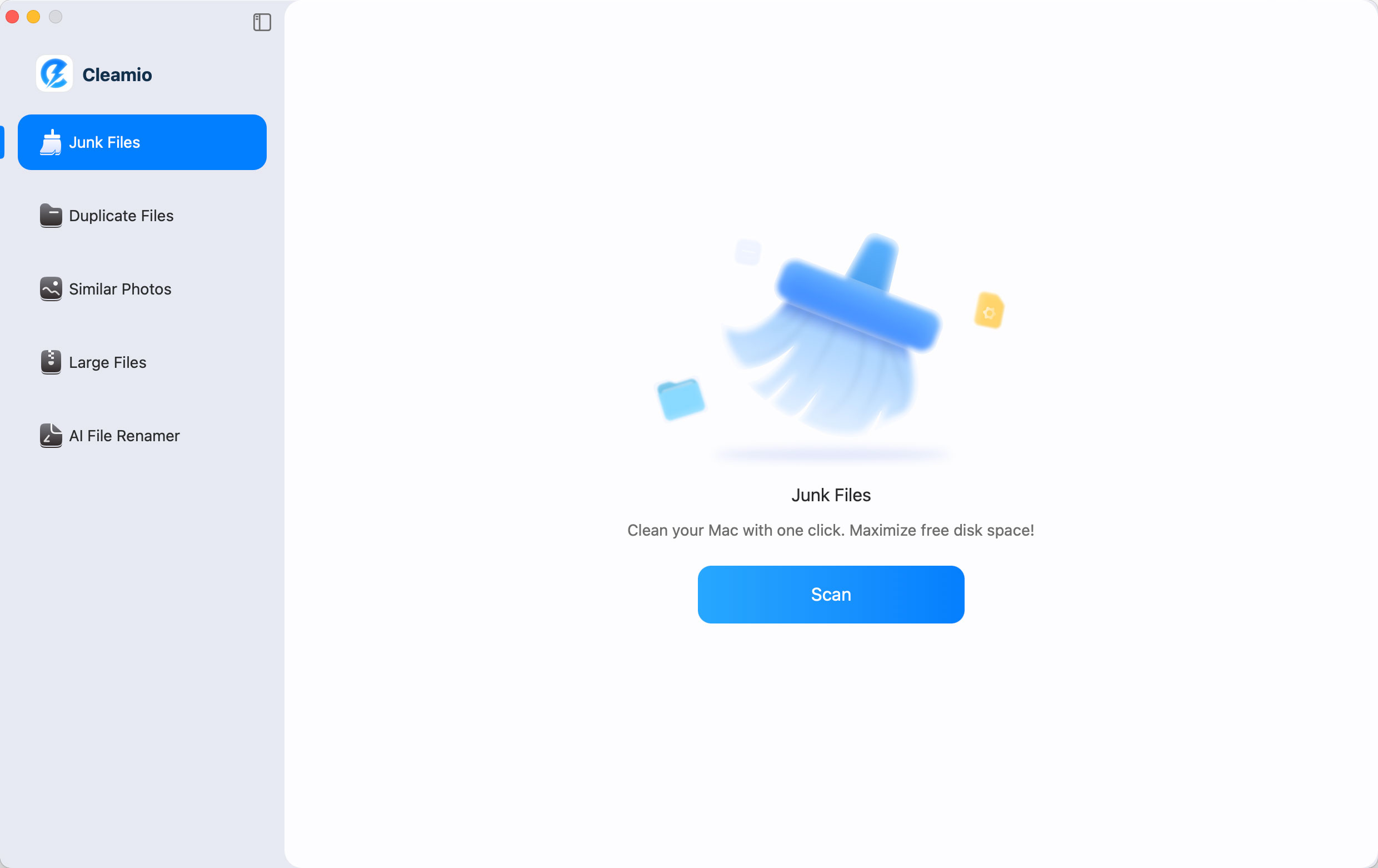
Download, install, and open Tenorshare Cleamio.
Choose 'Junk Files' from the left panel, then click 'Scan' to begin
scanning your Mac.
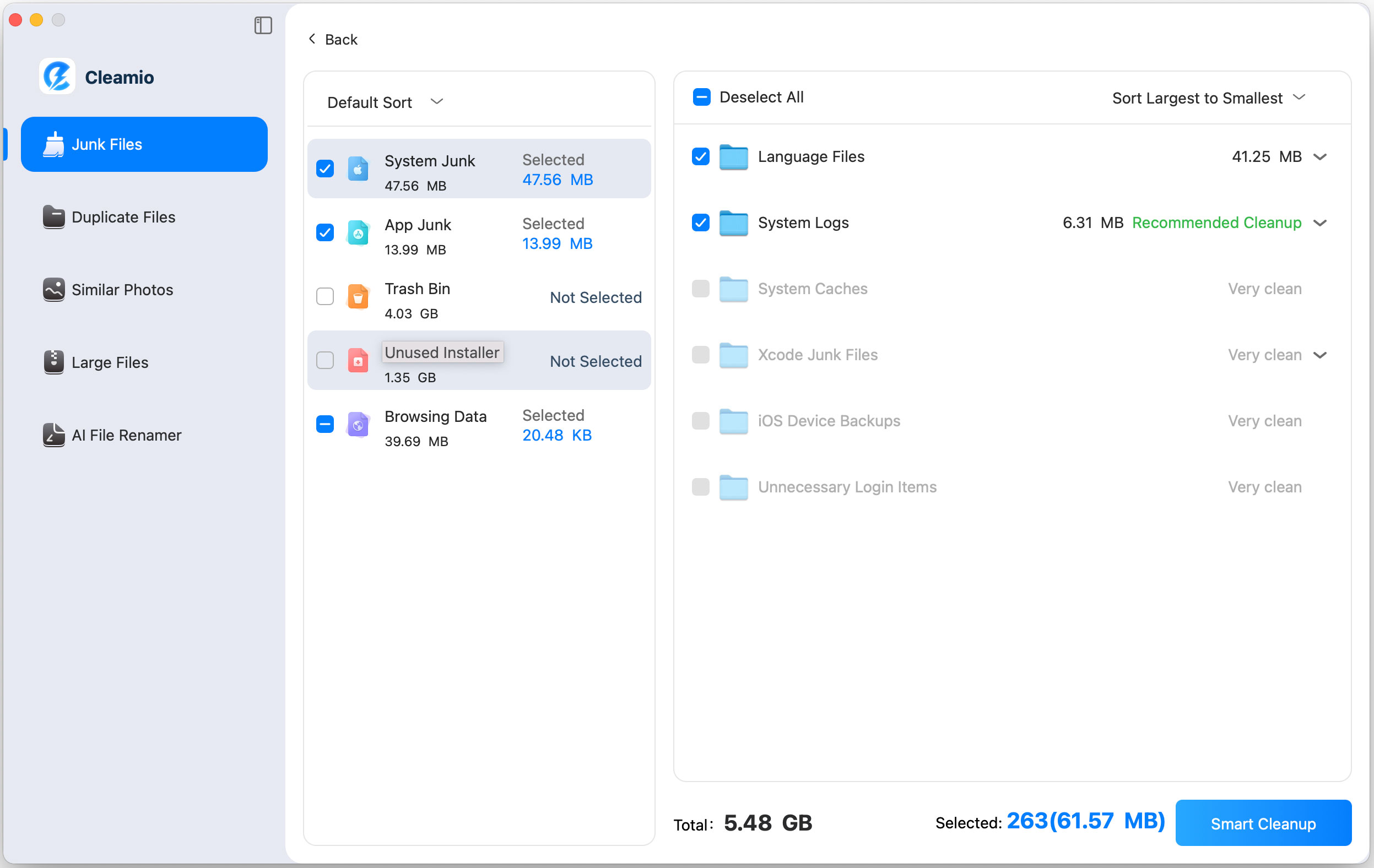
After the scan, Cleamio will display all detected junk categories. Select
the files you want to clean, then click 'Smart Cleanup.’
Wait for the cleanup process to complete. Once done, your Mac will have
more free storage and better performance.
Using Cleamio is the best way to improve Mac performance if you want fast
results without technical hassle. This macbook optimization software is
ideal for beginners and professionals alike.
Part 3. How to Improve Mac Performance Manually (6 Common Ways)
If you prefer hands-on control, manual tweaks are a great way to improve Mac
performance without relying only on software. These methods are simple,
effective, and give you direct control over system resources.
Follow the steps below to optimize Mac performance and keep your device
running smoothly.
1. Restart Your Mac & Empty Trash Regularly
A restart can fix many small performance problems. It clears temporary
memory, closes stuck background tasks, and refreshes system processes.
Emptying the Trash also helps free up storage space, which is important if
your Mac is starting to slow down because the disk is too full.
Click the ‘Apple logo’ in the top-left corner. Select ‘Restart’.
Wait for your Mac to reboot.
Click the ‘Trash’ icon in the Dock.
Right-click it and choose ‘Empty Trash.’
Confirm the action.
2. Update to the Latest macOS Version (Tahoe 26.x)
Apple recommends keeping your Mac updated for security, compatibility, and
stability. As of April 2026, Apple’s support pages reference macOS Tahoe 26
as the current latest major version for compatible Macs.
Click the ‘Apple’ logo.
Open ‘System Settings’ then Click ‘General.’
Select ‘Software Update.’
If an update is available, click ‘Update Now.’
Turn on automatic updates for future convenience.
3. Close Resource-Heavy Apps and Browser Tabs
Too many open apps and browser tabs can quickly use up memory and CPU power.
Chrome is especially known for consuming a lot of RAM when many tabs are
open. Closing apps you do not need can improve Chrome performance on Mac and
make the whole system run more smoothly.
Press Command + Space to open Spotlight Search.
Type ‘Activity Monitor’ and open it.
Click the ‘CPU’ tab.
Sort apps by usage to find the heaviest ones.
Select the unnecessary app or process.
Click the ‘X’ button to quit it.
Close unused Chrome or Safari tabs.
4. Enable Low Power / High Power Mode
MacBooks let you choose how your system balances battery life and speed. Low
Power Mode helps save battery, while High Power Mode gives better
performance for demanding tasks. If you want a faster system while plugged
in, changing this setting can help improve overall responsiveness.
Steps: Steps:
Open ‘System Settings’ (or System Preferences) and then Click on
‘Battery.’
Look for the power mode option.
Choose ‘High Power’ Mode for better performance.
Choose ‘Low Power’ Mode when you want to save battery.
Some apps open automatically when you start your Mac, and many continue
running in the background even when you are not using them. This can slow
startup time and reduce available memory. Managing these items is a great
way to speed up Mac startup and improve daily performance.
A helpful option here is Tenorshare Cleamio’s Mac Status Center. It can
monitor CPU, memory, and startup items in real time. It also helps you close
background apps, disable startup items, and free up storage so your Mac
stays optimized without too much manual work.
Open System Settings and then click ‘General.’
Select ‘Login Items.’
Review the list of apps that launch at startup.
Remove apps you do not need.
Open ‘Activity Monitor.’ and then check the ‘Memory’ tab.
Close heavy background processes you do not need.
6. Reduce Visual Effects and Animations
Animations and visual effects can make macOS look polished, but they also
use system resources. On older Macs, turning them down can make a noticeable
difference. This is one of the best settings to improve Mac performance if
you want the system to feel quicker and more responsive.
Steps:
Open ‘System Settings’ and then click ‘Accessibility.’
Select ‘Display.’
Turn on ‘Reduce Motion.’
Reduce transparency if the option is available.
Go to ‘Desktop & Dock.’
Turn off unnecessary animation effects.
These are key settings to improve Mac performance, especially if you want to
improve old Mac performance.
Part 4. Specific Case: How to Improve Gaming Performance on Mac
Gaming on Mac requires extra optimization. If you're wondering how to boost
Mac performance for gaming, follow these steps. Gaming can push your system
to its limits. Without proper optimization, you may experience lag, low FPS,
and overheating. These tweaks ensure smoother gameplay and better
performance.
1. Enable Game Mode
Game Mode is a useful feature in newer macOS versions that gives more system
resources to your game. It reduces background activity and helps your Mac
focus on smoother gameplay. This can improve responsiveness, reduce input
delay, and make games run better overall.
Open the game you want to play
Set the game to full-screen mode
macOS should activate Game Mode automatically
Press Command + Esc while in the game if you want to check the Game
Overlay.
Make sure Game Mode is turned on.
2. Switch to High Power Mode (Especially on MacBook Pro)
High Power Mode allows your Mac to use more system power for demanding tasks
like gaming. This is especially helpful on MacBook Pro models, where better
performance can make gameplay smoother and more stable. It is best to use
this mode when your Mac is plugged in.
Click the Apple logo.
Open ‘System Settings’ and then click ‘Battery’
Find the power mode option
Choose ‘High Power Mode.’
Connect your charger for the best gaming results
3. Close Background Apps and Free Up Resources
Background apps can quietly use memory and CPU power while you play. Apps
like Chrome, music software, video editors, or syncing tools can reduce your
game performance without you noticing. Closing them before gaming can free
up resources and help your Mac run games more smoothly.
Press Command + Space
Search for ‘Activity Monitor’ and open it.
Click the ‘CPU’ tab or ‘Memory’ tab
Look for apps that use a lot of resources.
Select the app you do not need.
Click the ‘X’ button to close it.
Also close extra browser tabs and unused apps on your desktop
4. Lower In-Game Graphics Settings for Higher FPS
If your game feels slow or choppy, lowering graphics settings is one of the
easiest ways to get better FPS. High-quality textures, shadows, and effects
look nice, but they also make your Mac work much harder. Reducing these
settings can give you smoother gameplay right away.
Open your game. Go to the ‘Settings’ or ‘Graphics’ menu
Lower the screen resolution
Reduce texture quality
Lower shadow quality
Turn off motion blur and extra visual effects
Save the changes and restart the game if needed.
Using these methods can greatly improve gaming performance on your Mac. Even
small changes like turning on Game Mode, closing background apps, or
lowering graphics settings can help reduce lag and make your games feel much
smoother.
Part 5. Long-Term Mac Maintenance & Prevention
Keeping your Mac fast is not a one-time task. Regular maintenance is the
best way to ensure smooth performance over time. Here are some simple tips
to follow:
Never ignore a macOS or app update.
Clean junk files regularly to free up storage
Keep macOS updated for better speed and security
Remove unused apps to avoid clutter
Limit startup items so your Mac boots faster
Restart your Mac weekly to refresh memory
Keep at least 20% storage free
Set a monthly reminder to run a Cleamio scan to remove junk before it
accumulates.
A smart way to manage everything easily is by using Tenorshare Cleamio’s Mac
Status Center. It helps you monitor CPU, memory, disk space, and startup
items in real time, so you can fix issues before your Mac slows down.
Not necessarily. A 7-year-old Mac can still perform well for browsing,
office work, media, and even some creative tasks if storage is managed well
and unnecessary background activity is reduced. Compatibility with the
latest macOS will depend on the exact model.
Q2: What is Ctrl + F4 on a Mac?
On a Mac, Control + F4 is used to move focus to the active window or switch
between interface elements, depending on your settings.
Q3: How do I make my Mac run faster?
You can make your Mac faster by cleaning junk files, closing unnecessary
apps, managing startup items and using tools like Cleamio to optimize
performance.
Q4: Is it okay to always leave my MacBook plugged in?
Yes, it is generally safe. Modern Macs manage battery health automatically.
However, unplugging occasionally can help maintain long-term battery life.
Conclusion
Improving your Mac performance doesn’t have to be
complicated. With regular cleanup, smart settings, and the right tools like
Tenorshare Cleamio, you can boost speed and prevent lag. If
you’re wondering how to improve Mac performance, consistency is key.
Keep your system clean, monitor resources, and manage storage to ensure
long-term smooth performance. Whether the Mac is brand new or several years
old, these optimization strategies keep it running smoothly for years to
come.






 iOS Tips & Latest Updates
 Bug Fixes, Unlock Guides
 Giveaways & Freebies





By Jenefey Aaron
2026-10-14 / Mac Optimization