
 iOS Tips & Latest Updates
 Bug Fixes, Unlock Guides
 Giveaways & Freebies

ReiBoot - No.1 Free iOS System Repair Software
Fix 150+ iOS Issues without Data Loss & Safely iOS 27 Upgrade/Downgrade
ReiBoot: No.1 iOS Repair Tool
Fix 150+ iOS Issues, No Data Loss
If your iPhone is stuck on the Apple logo, frozen during an update, or showing the support.apple.com/iphone/restore screen, you may be dealing with iPhone Recovery Mode.
Many users panic when they see Recovery Mode because they are not sure what caused it, whether their data is safe, or how to get the device working again. This guide explains what iPhone Recovery Mode means, why it happens, whether it deletes data, and how to enter, exit, or fix Recovery Mode issues safely.

iPhone Recovery Mode is a built-in troubleshooting environment in iOS. It allows your iPhone to connect with Finder or iTunes when the operating system cannot start normally.
Recovery Mode is commonly used to:

Recovery Mode itself is not an error. It is a repair state that helps your computer communicate with your iPhone when iOS cannot boot properly.
You may see Recovery Mode when your iPhone displays a computer icon, a cable icon, or the support.apple.com/iphone/restore screen.
An iPhone usually enters Recovery Mode because iOS was unable to complete a critical process. In many cases, this is related to an update, restore, or system-level error.
 Please swipe to view
Can a Failed iOS Update Trigger Recovery Mode?
Yes. A failed iOS update is one of the most common reasons an iPhone enters Recovery Mode. If your iPhone loses power, disconnects from the computer, runs out of storage, or fails to install firmware correctly, iOS may enter Recovery Mode to prevent further system damage.
Does Low Storage Cause iPhone Recovery Mode?
Low storage does not directly cause Recovery Mode. However, it can cause an iOS update to fail. If the update cannot complete, your iPhone may end up in Recovery Mode.
Can an Interrupted Update Put My iPhone Into Recovery Mode?
Yes. If the update is interrupted by power loss, USB disconnection, unstable network, or software crash, your iPhone may automatically enter Recovery Mode.
Can Recovery Mode Fix Issues After an iOS Update?
Recovery Mode itself does not repair your iPhone. It provides access to repair options, such as updating iOS, restoring the device, or using an iOS system repair tool.
Think of Recovery Mode as the repair doorway. The actual fix depends on whether you choose Update, Restore, or a system repair solution.
You may need to manually enter recovery mode to troubleshoot, restore, or repair your device.
Before you start:
Tenorshare ReiBoot can put your iPhone into recovery mode with a single click — no button combinations required. Connect your iPhone, open ReiBoot, and click "Enter Recovery Mode."
This is especially useful if your iPhone's physical buttons are damaged or unresponsive.




iPhone 8, X, 11, 12, 13, 14, 15, 16, 17 (Face ID models):
iPhone 7 and 7 Plus:
iPhone 6s, SE (1st gen), and earlier (with Home button):

The timing matters. On Face ID models, the Volume Up and Volume Down presses need to be quick taps — not holds. Then the Side button hold is continuous. If you're getting the power-off slider instead, you're holding too long before step 3.
Force restart your iPhone using the same button sequence for your model as above, but don't hold through the Apple logo — release when it appears. This exits recovery mode in most accidental-entry cases and takes under 30 seconds.
This works when: Recovery mode was triggered accidentally and there's no underlying software damage.
This won't work when: Your iPhone has a software issue causing a recovery mode loop — it will re-enter recovery mode after restart.
If force restart doesn't work, Tenorshare ReiBoot's Exit Recovery Mode function is free and takes one click.
Connect your iPhone to a computer with iTunes (Windows) or Finder (Mac). You'll see two options: Update and Restore.
iTunes no longer exists on Mac. Open Finder instead → connect iPhone → it appears in the sidebar under Locations → click it to see the recovery mode options.
Before running any repair, get clear on two things that users commonly worry about.
Does iPhone recovery mode delete everything?
No. Entering recovery mode does not erase your data. Your photos, messages, contacts, and apps remain completely intact while the device is in recovery mode.
Data loss only happens in two specific situations:
Standard repair methods — including ReiBoot Standard Repair, the iTunes "Update" option, and simply exiting recovery mode — do not affect your personal data.
How long will my iPhone stay in recovery mode?
If no computer connects within 15 minutes, the iPhone will automatically attempt to exit recovery mode. If it can't exit (due to an underlying software issue), it will restart and likely re-enter recovery mode — creating a loop.
A recovery mode loop is a sign that there's actual system damage that needs repairing, not just exiting.
What should I do if my iPhone won't exit recovery mode?
If force restart and simple exit attempts fail, your device is likely in a recovery mode loop caused by software corruption. At this point:
Not all recovery mode problems are the same. The right fix depends on what's causing the issue and what state your device is in.
Please swipe to view
When it works: Software-caused recovery mode issues — failed updates, corrupted system files, recovery mode loops. Covers approximately 95% of cases.
When it won't work: Hardware damage, or cases where the iPhone is completely undetected by the computer.
What it does: Rewrites the iOS system environment without touching personal data. Think of it like repairing a corrupted system file on a computer — you fix the broken part, not the whole drive.
Here is how to use ReiBoot:
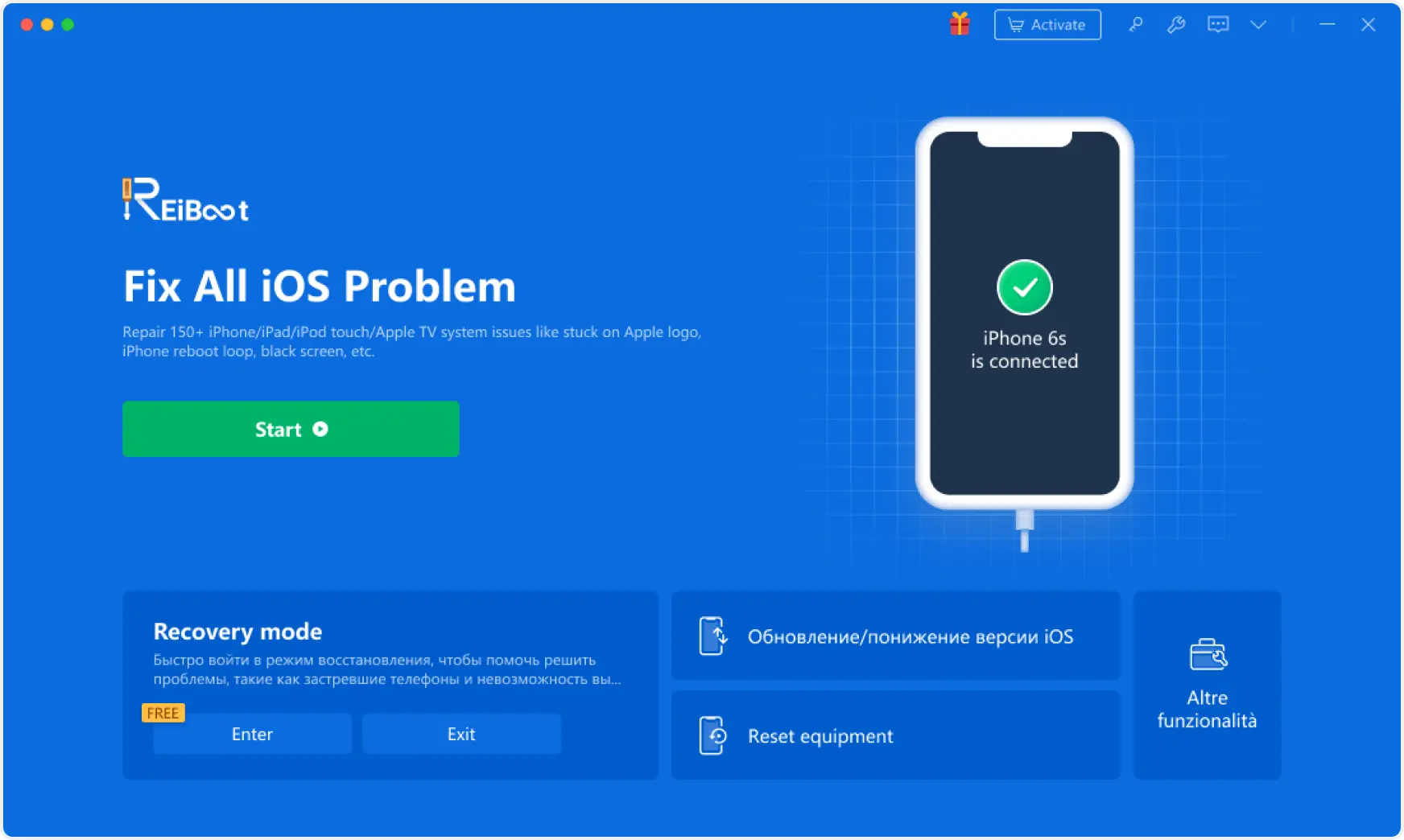
Download and install ReiBoot on your PC or Mac. Connect your iPhone via cable
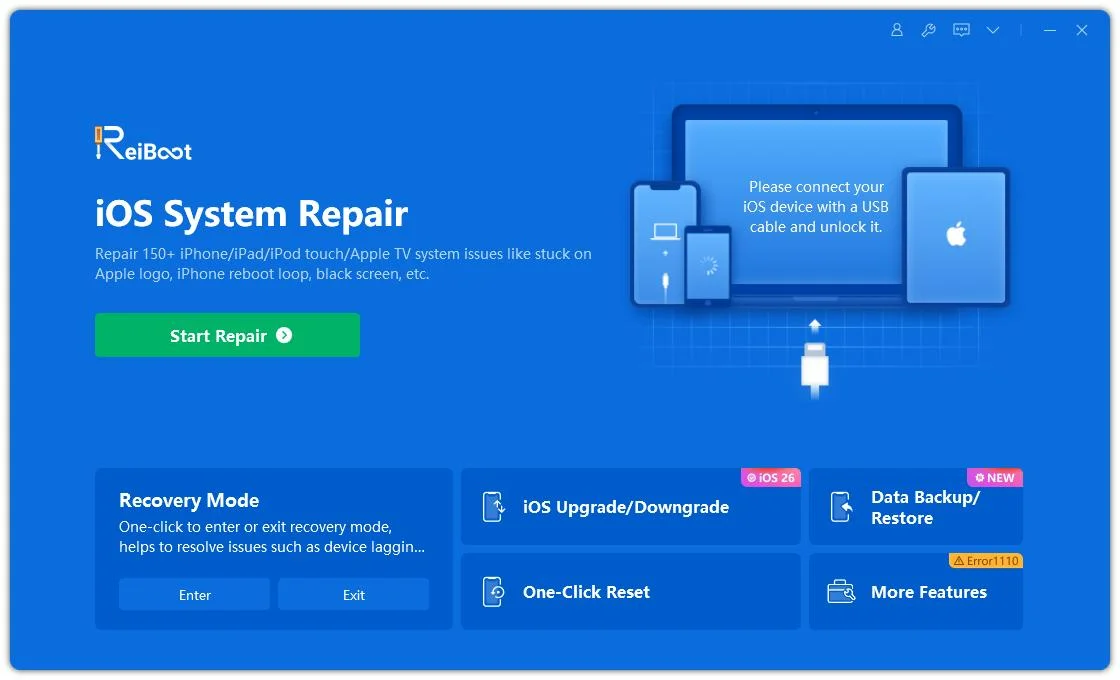
Go to "Fix Now" option and select "Standard Repair".
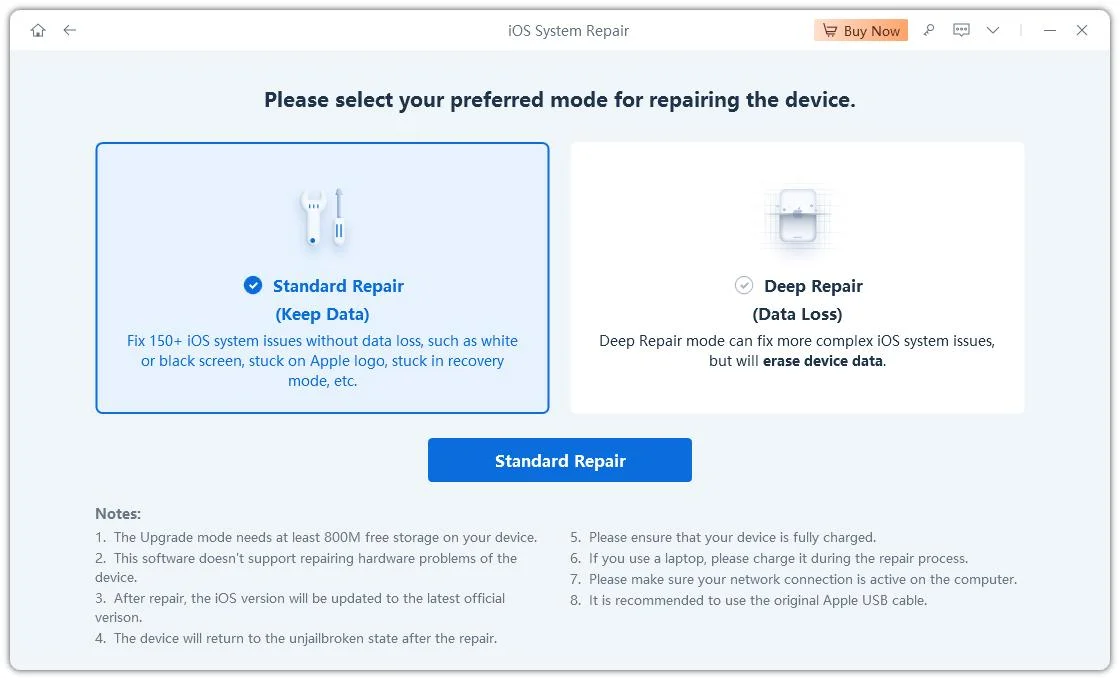
Download the firmware package (ReiBoot will find the right version automatically)
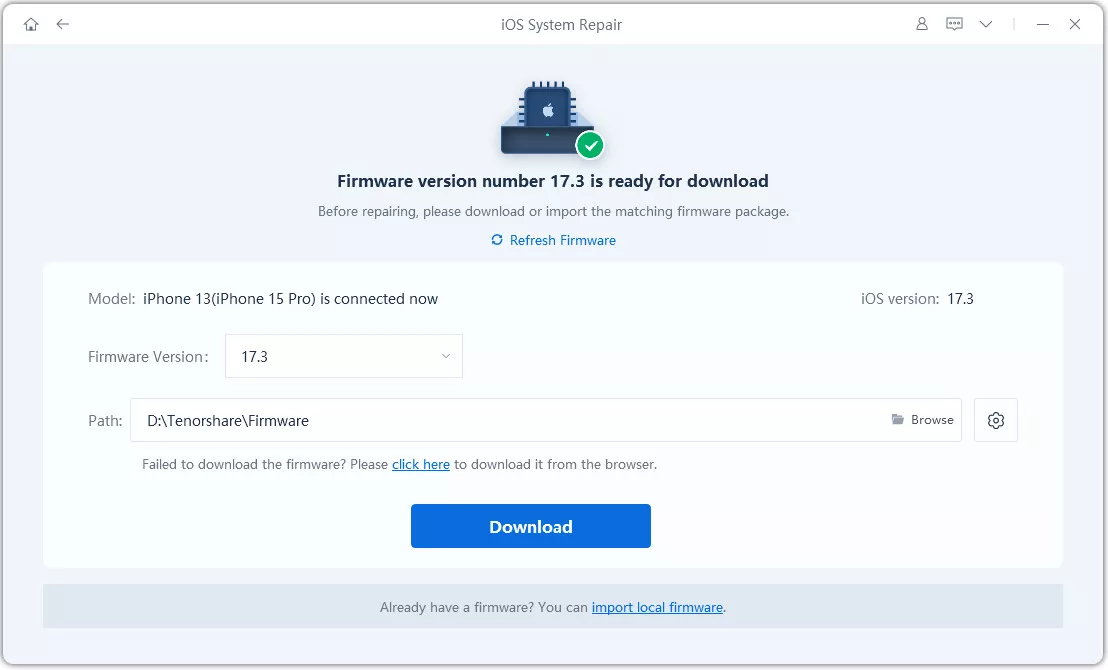
After downloading, click "Start Standard Repair".
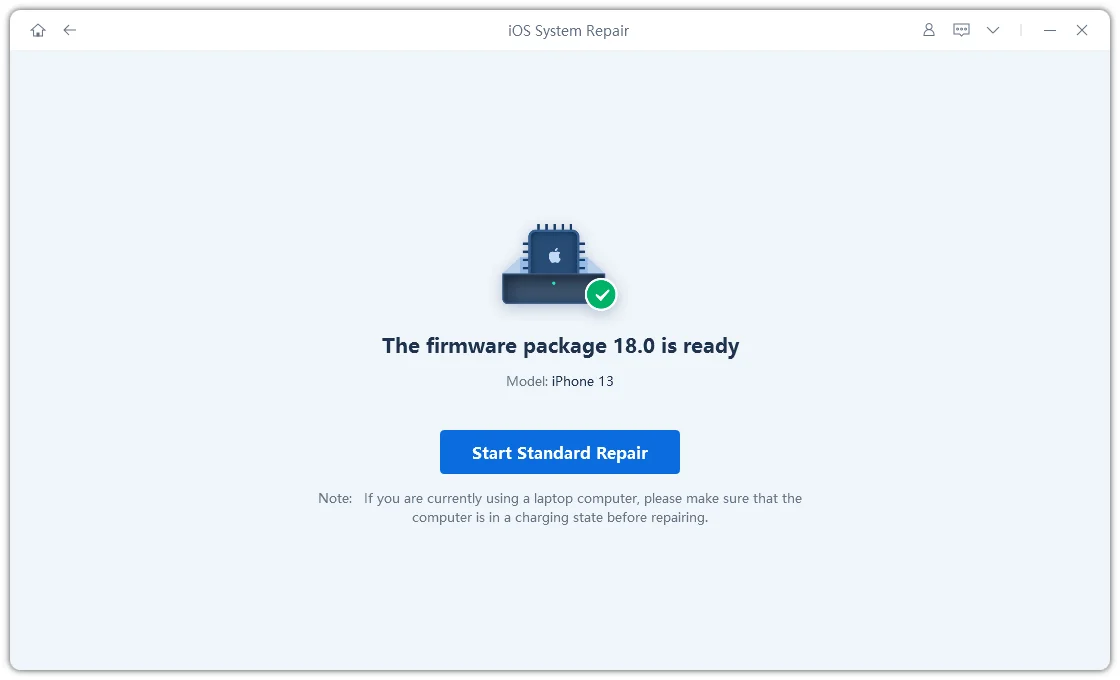
Wait 10–15 minutes — iPhone restarts normally when complete.
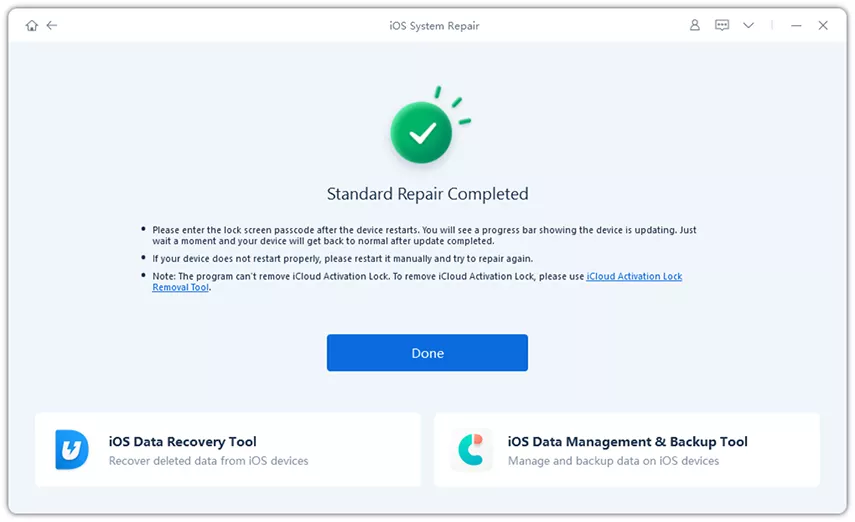
In rare cases involving severely corrupted system files, Standard Repair may not be sufficient. If it fails, proceed to Deep Repair below.
If ReiBoot isn't available, the iTunes/Finder "Update" option is the manual alternative that attempts to reinstall iOS without erasing data.

Limitation: If the system corruption is too deep, the Update process may fail partway through and prompt you to Restore instead.
Use this only after Standard Repair and iTunes Update have both failed.
Deep Repair / iTunes Restore completely erases your iPhone. You will lose all data not backed up to iCloud or iTunes.
Before proceeding:
Why Deep Repair sometimes succeeds when Standard Repair fails: Standard Repair rewrites the system environment. Deep Repair performs a complete system reinstall — effectively the same as iTunes Restore, but through ReiBoot's interface, which handles certain edge cases iTunes doesn't.
Software repair tools — including ReiBoot — only fix software-caused issues. If your iPhone has any of the following, the recovery mode problem is likely hardware-related and requires Apple Service:
In these cases, contact Apple Support or visit an Apple Authorized Service Provider.
The process is the same, but the software interface differs.
On Windows: Use iTunes (download from Microsoft Store or apple.com/itunes). Connect iPhone → iTunes detects recovery mode → choose Update or Restore.
If iTunes doesn't recognize your iPhone in recovery mode, you may need to install the Apple Mobile Device USB Driver. Go to Device Manager → find the device with a yellow warning icon → right-click → Update Driver.
On Mac (macOS Catalina and later): Use Finder instead of iTunes. The device appears in the Finder sidebar under Locations when in recovery mode.
On Mac (macOS Mojave and earlier): iTunes is still available and works the same as the Windows version.
Users often confuse these two modes. They're different tools for different situations.
Please swipe to view
The rule: Always start with Recovery Mode. Only attempt DFU Mode if every recovery mode solution has failed.
No. Entering recovery mode does not erase data. Data loss only occurs if you perform a Restore through iTunes/Finder, or use a repair tool's Deep Repair option. Simply entering and exiting recovery mode leaves all your data intact.
Try a force restart first. For iPhone 8 and later: quickly press Volume Up → quickly press Volume Down → hold the Side button until the Apple logo appears. This resolves accidental entry in most cases and takes less than 30 seconds. No computer or software is required.
Yes. An iTunes Restore erases all data on your device. Before proceeding, try ReiBoot Standard Repair or choose the "Update" option in iTunes/Finder first. Both methods attempt to repair iOS without erasing personal data. Only use Restore if those options fail.
This usually means the underlying iOS system is corrupted, and simply exiting recovery mode is not enough. The system itself needs to be repaired. In most software-related cases, ReiBoot Standard Repair can rebuild the iOS environment without erasing personal data, helping break the recovery mode loop.
Recovery mode is a diagnostic and repair state. Entering recovery mode does not change, erase, or modify any data on your device. A factory reset, on the other hand, removes all content and settings. You can enter and exit recovery mode multiple times without affecting your personal data.
Recovery Mode should always be your first choice. It is easier to access, less aggressive, and can resolve most iOS update, restore, and boot-related issues. DFU Mode is generally considered an advanced troubleshooting option and should only be used when Recovery Mode fails to resolve the problem.
Try the following troubleshooting steps:
If your iPhone still cannot be detected after trying these steps, the issue may be related to the charging port or another hardware component.
ReiBoot Standard Repair is a non-destructive repair mode that rewrites iOS system files without affecting personal data. It has supported iPhone devices since 2015 and works with a wide range of iPhone models and iOS versions. Deep Repair, however, erases data and clearly notifies users before the process begins.
Not directly. Recovery Mode combined with iTunes or Finder Restore installs the latest iOS version that Apple is currently signing, not an older version. To downgrade to a specific iOS version, Apple must still be signing that firmware version.


then write your review
Leave a Comment
Create your review for Tenorshare articles
Share this post


ReiBoot - No.1 Free iOS System Repair Software
Fix 150+ iOS Issues without Data Loss & Safely iOS 27 Upgrade/Downgrade
ReiBoot: No.1 iOS Repair Tool
Fix 150+ iOS Issues, No Data Loss
By Jenefey Aaron
2026-09-24 / iPhone Tips