Have you ever searched your Mac for a file you know exists, only to find
nothing? That’s often because macOS hides certain system and configuration
files by default. This guide teaches
how to show hidden files on Mac Sequoia, Tahoe, and other versions
quickly in 4 ways.
It can help you troubleshoot issues, access advanced settings, or manage
storage more effectively without risking system stability when done correctly.
Part 1. Quickest Method: Show Hidden Files on Mac Finder (Primary Shortcut
Method)
The fastest and most used way to display hidden files in Finder macOS is
through a simple Finder keyboard shortcut. This method works instantly and
does not permanently alter system settings unless you want it to.
Keyboard Shortcut to Show Hidden Files on Mac
Shortcut: Command + Shift + Period (.)
Best For:
Quick access to hidden files
Viewing hidden files on Mac external drives, USBs, or flash drives
Temporary troubleshooting or file checks
When to Use: Use this shortcut when you need a fast toggle without
using Terminal or installing extra tools.
Steps to Display Hidden Files in Finder
Open the "Finder" and navigate to any folder (such as Macintosh HD, an
external drive, or a USB drive).
Press “Command + Shift + Period (.)”
Hidden files will appear, and you can press the shortcut again to hide
them.
How to Show Hidden Files Permanently in Finder (Quick Answer)
The shortcut itself is session-based, and the hidden files remain visible
until Finder restarts. For permanent visibility, use the Terminal method in
Part 2
Part 2. Other 3 Ways to Find Hidden Files on macOS (Sequios/Tahoe/Earlier
Versions)
If the Finder shortcut doesn’t fit your needs, macOS provides other reliable
ways to view invisible files, ranging from built-in navigation tools to
visual third-party apps.
1. Use the "Go to Folder" Method
This method lets you jump straight to hidden folders if you already know the
file path. However, this method is not useful at all if you do not know the
exact location of the hidden files.
Shortcut: Command + Shift + G
Best For: Accessing specific hidden directories; Opening system or
app folders quickly
When to Use: When you know the exact location, such as ~/Library or
/Applications
Steps:
Below is a quick trick to view invisible files on a Mac:
Open Finder and click “Go” in the top menu.
Select “Go to Folder” and enter the file path (e.g., ~/Library), then
click “Go".
2. Make Hidden Files Always Visible on a Mac Using Terminal (Always Show
Hidden Files on Mac)
This is the best method if you want hidden files to be always visible by
default.
Best For: Developers; Advanced users; Frequent system access
When to Use: When you want a permanent solution, even after the
Finder restarts.
Steps:
Here is how you can always show hidden files on a Mac:
Open Terminal by pressing “Cmd + Space" and searching for
"Terminal," then opening it.
Run the command “$ defaults write com.apple.Finder AppleShowAllFiles
true”
Run the command “$ killall Finder”
Now, you will be able to see all hidden files by default.
Although this method unhides the hidden files, it can also be a
privacy/security threat if your Mac is accessible by multiple users.
3. Use Third-Party NekTony Funter (Visual Tool)
Funter is a Finder-style app that visually displays hidden files without
Terminal commands.
Best For: Beginners; Visual learners; One-click hidden file viewing
When to Use: When you want a safer, GUI-based approach.
Steps:
If you want to see hidden files in your Mac's external drive or internal
drive, here are the steps to do that with Funter:
Download and install Funter and launch the app
Open Funter menu from the top bar, toggle “Show Hidden Files," and
browse hidden files visually.
This might be the best approach for an average user who does not care much
about their file privacy and integrity, especially when only they themself
are using the Mac.
Part 3. Why Can't I See My Hidden Folder on My Mac?
In most cases, hidden files don’t appear because Finder hasn’t refreshed,
permissions are limited, or the files are stored in system-protected
locations.
2. Troubleshooting If Hidden Files Still Don't Appear
Try these steps in order if you want to view hidden files on a Mac:
Use Go > Go to Folder (Command + Shift + G).
Restart Finder (Option + Right-click Finder > Relaunch).
Check file permissions via “Get Info”.
Confirm the drive is mounted properly.
Restart your Mac.
These steps resolve most hidden-file visibility issues without advanced
tools.
Part 4. Advance: Finding Hidden Files While Cleaning Junk and App Leftovers
Sometimes, hidden files surface when you’re cleaning your Mac, not when
you’re actively searching for them. This is where a professional Mac cleaner
can help.
Tenorshare Cleamio
is an all-in-one Mac cleaning and app management tool that can surface
hidden files during junk scans and
app leftover removal
without risking system damage.
How Cleamio Helps Find Hidden Files on Mac
Cleamio automatically lists certain hidden files and folders during scans,
including:
~/.Library
.DS_Store
.htaccess
.git
.bashrc
.Trash
However, Cleamio does not allow deleting protected system-level hidden
files, reducing the risk of accidental damage.
Best For
Cleaning hidden app leftovers
Identifying space-consuming invisible files
Safe discovery without Terminal commands
How to Find Hidden Files While Cleaning Junk and App Leftovers with Cleamio
Method 1:
Download and install
Tenorshare Cleamio
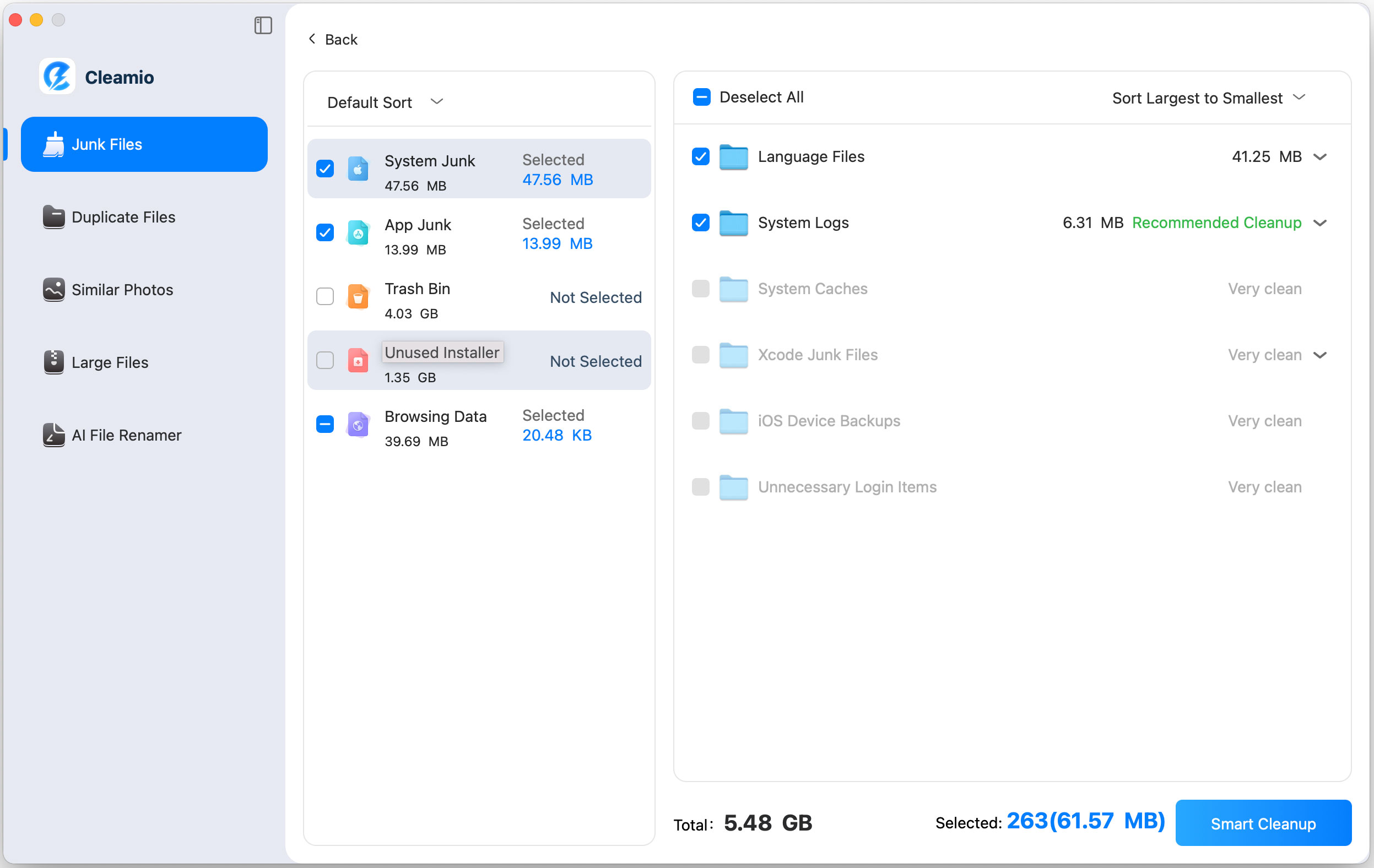
on your Mac and launch it. Now, go to the "Junk Files” section and click
“Scan” to begin scanning your Mac.
After the scan is complete, you can check all the Junk Files found on
your Mac, and you can check them with their folder names or their file
types. Expand each item and you can find detected hidden files. Choose
them and click “Smart Cleanup”.
Method 2:
Now, go back to the Cleamio home interface and click "App Management"
and click "Start."
Go to the "Residual Files" section, and you can see all the leftover
files (including some hidden files) with the user-friendly Cleamio
interface.
In this way, you can easily find any hidden files that won’t show in Finder
otherwise, making it very easy and, more importantly, safe for an average
user. The best thing about Cleamio is that it does not support deleting any
system files, so you can be sure about the integrity of your system.
People Also Ask about Mac Showing Hidden Files
Q1: How to show hidden files on Mac without a shortcut?
Use Terminal commands, Go to Folder, or a third-party tool like Funter or
Tenorshare Cleamio.
Q2: How to make hidden files always visible or by default on macOS
Tahoe/Sequoia?
You can use the terminal command “$ defaults write com.apple.Finder
AppleShowAllFiles true" to make hidden files always visible by default on
macOS. These files will remain visible even after you restart the Finder.
Q3: How to open hidden files on Mac?
Reveal them first using Finder shortcut or Terminal, then open them like
normal files.
Q4: Is the method different on macOS Tahoe vs Sequoia?
No. The Finder shortcut and Terminal commands work the same across recent
macOS versions.
Conclusion
Knowing
how to show hidden files on Mac Sequoia, Tahoe, and more versions
gives you greater control over your system, whether for troubleshooting,
development, or storage cleanup.
While Finder shortcuts and Terminal commands work well, tools like
Tenorshare Cleamio offer a safer, visual way to uncover hidden files
during routine maintenance. Hence, making advanced file management both
accessible and secure.







 iOS Tips & Latest Updates
 Bug Fixes, Unlock Guides
 Giveaways & Freebies






By Jenefey Aaron
2026-09-28 / Mac Tips