


ReiBoot - No.1 Free iOS System Repair Software
Fix 150+ iOS Issues without Data Loss & Safely iOS 27 Upgrade/Downgrade
ReiBoot: No.1 iOS Repair Tool
Fix 150+ iOS Issues, No Data Loss

The prerequisite for successfully fixing this question is accurate diagnosis. You cannot apply a software fix to a shattered display, nor should you pay for an expensive screen replacement if it's merely an iOS or Android system bug. This guide will help you differentiate between the two. Carefully compare your phone's symptoms with the distinct categories below to pinpoint your exact issue and apply the corresponding solution.
This is the most frequently reported scenario across tech communities. It typically occurs after a device is dropped, subjected to heavy pressure, or exposed to moisture. This physical trauma fractures the inner LCD layers or allows air and water to penetrate the display panel---a condition commonly referred to as "OLED rot."
Diagnostic Symptoms:
Physical screen damage rarely stays static. It usually starts as a faint, small dot but aggressively spreads like spilled ink. For instance, a Pixel 7 user on Reddit documented this exact symptom, noting that despite the screen still being responsive, the blue blotches at the bottom were slowly spreading upwards.

The deterioration process is rapid. As another user pointed out in a related discussion, whether the root cause is a hard impact or water damage (like a quick dive in a pool), you can expect the spot to consume the entire display within a week or two.

Action Plan & Solution:
If you are wondering, "how do i fix blue spots on my phone" under these circumstances, the harsh reality is that physical panel leakage is 100% irreversible.
The spreading effect you see is actually the OLED screen lamination (the internal layers of the screen) separating from each other. As advised by experts in the mobile repair community, no software tool can reverse this physical separation.

Your only viable solution involves two immediate steps:
For users with devices that are 3 to 4 years old (such as an older iPhone X), a blue patch might not be the result of an external drop. Instead, it is frequently caused by internal pressure from an aging, swollen battery pushing up against the display panel.
Diagnostic Symptoms: Unlike the rapid spreading of LCD leakage, a battery-induced blue spot usually appears as a static blue shadow or smudge. It is most visible against a dark background, while the screen surface itself remains perfectly intact. In severe cases, you may also notice your phone case slightly bulging or the screen lifting from the frame.
A user recently posted about a sudden, unmoving blue smudge on their device, asking if it was a simple issue they could fix themselves:

The community quickly identified the root cause. As an experienced user pointed out, this specific discoloration is a classic "pressure spot from under the LCD," which serves as a clear warning sign that the internal battery is starting to expand.

Action Plan & Solution:
If you suspect your blue spot is caused by battery bloat, treat it as a hardware emergency:
Sometimes, a blue patch isn't a display issue at all. If your screen works perfectly when turned on, but you notice a faint blue or purple smudge when the display is off, you are likely dealing with oleophobic coating degradation.
Diagnostic Symptoms: This cosmetic issue is strictly visible when the screen is dark and viewed under certain lighting angles. The blue patch typically appears in areas where your thumb frequently rests or swipes (such as the bottom half of the screen used for scrolling through short videos).
A user recently documented this exact phenomenon, noting a "faint blue patch visible on phone screen when display is off," despite the glass being uncracked and the phone functioning normally.

Modern smartphone screens are treated with an oleophobic (oil-repellent) coating to resist fingerprints. Over time, friction from repetitive swiping wears this microscopic layer down. Additionally, as pointed out in the discussion above, chemical residues on your hands (such as lotions, degreasers, or harsh cleaners) can prematurely strip this coating, leaving behind a smudge-like blue reflection.

Action Plan & Solution:
Since the internal LCD/OLED panel is perfectly fine, you do not need an expensive screen replacement. The Reddit community highly recommends a simple, two-step cosmetic fix:

If you've recently had your screen or battery replaced at a third-party repair shop---or if you attempted a DIY repair---and a blue patch suddenly appeared, the culprit is likely improper assembly.
Diagnostic Symptoms: In this scenario, the blue spot is not caused by a drop or liquid damage. Instead, it appears at a very specific, fixed location on the screen, often directly aligning with internal components like logic board screws or battery connectors.
For instance, an iPhone X user recently shared an image of a dark blue smudge appearing shortly after a DIY screen replacement.

Upon further investigation, the user discovered the exact cause. They admitted to struggling with a stripped screw on the logic board plate during reassembly. As a result, the plate was left slightly elevated. By comparing the blue mark's location with the phone's internal schematic, they confirmed the elevated screw was pushing directly into the back of the new LCD screen.

Similarly, other users have reported blue spots appearing after battery replacements. If the new battery is seated even slightly higher than normal, or if the cover isn't perfectly flat, it exerts continuous pressure on the delicate display layers from the inside.


Action Plan & Solution:
The repair community's consensus for this issue is straightforward: relieve the pressure.

Sometimes, what appears to be a hardware defect is actually a perfectly normal design feature of modern smartphones.
Diagnostic Symptoms: Before you panic about a blue spot, check its exact location and behavior. If you see a tiny, static blue or purple dot near the top edge of the screen---especially near the camera cutout or the earpiece---it might not be screen damage at all.
A Samsung Galaxy user recently posted a picture asking, "What are these blue dots in my device?", pointing out a faint blue reflection near the edge of their screen.

These under-display sensors often have a specialized coating that reflects light differently than the rest of the screen, sometimes appearing as a small blue, purple, or reddish dot under direct light.
No Action Needed: If the dot is perfectly round, located near the top bezels, and does not spread or affect the touchscreen's functionality, rest assured. This is a normal hardware component, and no repair or software fix is necessary.
This dot is merely the proximity sensor. Modern phones place proximity and ambient light sensors under the glass to detect when the phone is held to your ear (to turn off the display) and to auto-adjust screen brightness.
Not every blue anomaly requires a costly screen replacement. Sometimes, a blue spot on iphone screen or Android display is a purely digital illusion---a system-level rendering failure rather than shattered physical hardware.
Diagnostic Symptoms:
You can confidently identify a software glitch if your device exhibits any of the following behaviors:


Action Plan & Solution:
Fix 1: Restart Your Fone
If you are trying to fix blue screen glitches on mobile, the first and simplest step is to perform a Force Restart to clear the active memory and halt any crashing background processes.

Fix 2: Disable Auto-Display Adjustments
While Apple's True Tone and Night Shift features brilliantly adapt your screen's temperature to ambient lighting, a software hiccup can sometimes lock the display into an overly cool, blue-tinted state. Furthermore, accidentally enabling Accessibility Color Filters can create unnatural blue patches. Turning these off forces the screen back to its native color profile.


Go back to Settings > Accessibility > Display & Text Size > Color Filters, and ensure this feature is completely disabled.

Fix 3: Uninstall Glitchy or Incompatible Applications
Because of Apple's strict sandbox environment, true "malware" is rare. However, poorly optimized apps---especially heavy widgets, screen recorders, or outdated games---can cause severe UI conflicts and memory leaks, leading to blue screen overlays or localized rendering glitches.

Fix 4: Patch Known Bugs with an iOS Update
Apple frequently releases firmware updates to address display driver bugs and system-level rendering crashes. If your current iOS version is outdated or running on a beta channel, it might contain underlying glitches causing the blue screen anomaly.

Fix 5: Perform a "Reset All Settings"
If the blue glitch persists after an update, deep-rooted configuration conflicts might be to blame. Performing a settings reset will wipe out all custom network, Bluetooth, and display configurations without deleting your personal data (like photos or messages), returning the OS behavior to factory default.

However, if a hard reset or other settings doesn't work, it indicates that your core operating system files might be corrupted. For deep-level troubleshooting tailored to your specific device, refer to our dedicated, step-by-step repair guides:
For iOS Users: How to Fix iPhone/iPad Blue Screen of Death After Update
For Android Users: How to Fix Android Blue Screen Issues
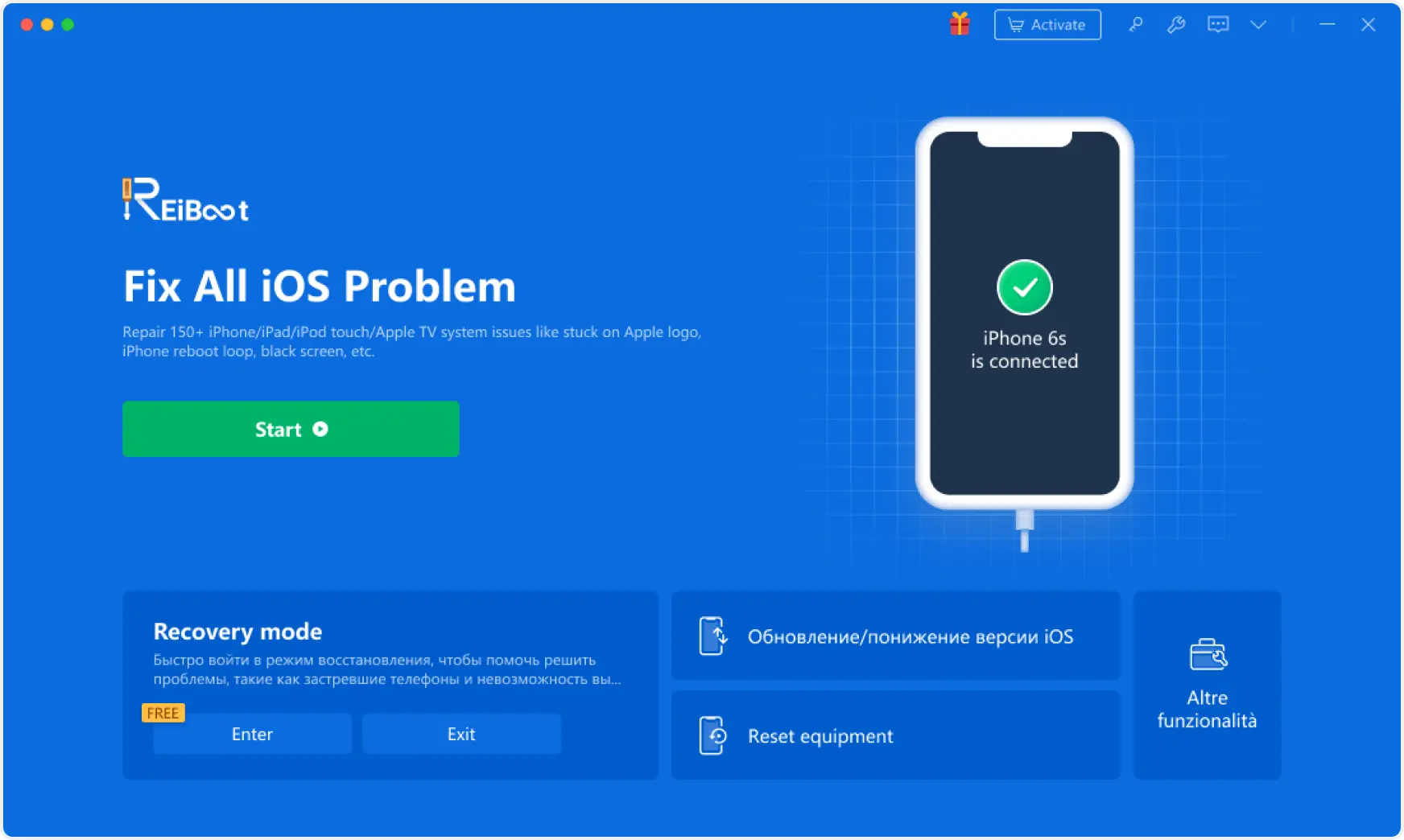
Before paying $200+ for hardware repairs, you must rule out iOS/Android display errors. If a system crash caused the issue, repairing the operating system is the best way to fix blue spots on phone screen. The safest method is using a professional tool like Tenorshare ReiBoot. Its "Standard Repair" mode deeply refreshes the core OS to eliminate display bugs without erasing your personal data.
Think of this as your final diagnostic test: if the blue patch disappears after rebooting, you just saved hundreds of dollars. If it persists, you can confirm it's 100% hardware damage and safely proceed with a screen replacement.




Step-by-step Guide: Fix Blue Screen Glitches with ReiBoot


A blue patch on your mobile screen can be alarming, but correctly diagnosing the root cause is half the battle. If the spot spreads like ink (OLED leakage) or stems from battery bloat, you are facing physical hardware damage that requires a professional screen or battery replacement.
However, before you commit to expensive repair bills, you should always rule out system-level rendering glitches. By using a trusted recovery tool like Tenorshare ReiBoot, you can safely run a deep iOS system refresh without losing any personal data. If your blue spot is merely a software bug mimicking hardware damage, ReiBoot will fix it in minutes---saving your device, your time, and your money.
No. If the blue spot is caused by physical hardware damage like OLED leakage, it will rapidly spread and worsen. It will only disappear if the spot is caused by a software glitch (fixable via system reboot) or temporary internal pressure that is later removed.
If it is a software rendering bug, you can fix it at home using system repair tools like ReiBoot for minimal to zero cost. However, if the LCD panel is physically broken and leaking, a full screen replacement typically costs between $100 and $300+, depending on your phone model.
No. If a blue patch appears after liquid exposure, the internal display layers are already permanently separated or damaged. Rice cannot reverse this physical OLED rot. You must back up your data immediately before the screen dies completely.
A blue spot or tint appearing immediately after an iOS update is usually a system-level rendering bug rather than physical damage. You can resolve this display glitch without losing data by performing a standard OS repair using professional software like Tenorshare ReiBoot.
You cannot stop it. Once an OLED or LCD screen suffers a physical fracture and begins leaking "blue ink," the deterioration is irreversible. Your immediate priority should be to back up all personal data before the screen goes entirely black and unresponsive.
then write your review
Leave a Comment
Create your review for Tenorshare articles
Share this post


ReiBoot - No.1 Free iOS System Repair Software
Fix 150+ iOS Issues without Data Loss & Safely iOS 27 Upgrade/Downgrade
ReiBoot: No.1 iOS Repair Tool
Fix 150+ iOS Issues, No Data Loss
By Jenefey Aaron
2026-09-10 / Reviews